A Wanju Temple Journey to Find True Peace of Mind
8 stops · 6 hours
Wanju's temples, Hwaamsa and Songgwangsa, are elegant and tranquil places well suited to lingering at ease and reflecting on yourself. Praised by poet Ahn Do-hyun as "a temple like a small but precious book you want to open now and then, alone," Hwaamsa Temple, Songgwangsa Temple with its spectacular spring cherry blossoms, and the connecting Wibongsanseong Fortress make for a walk where you can create your own romantic memories. Daeaho Lake along the way from Hwaamsa to Songgwangsa is also worth seeing.
- Duration
- 6 hours
- Distance
- Approx. 50km
Along the way
- 1
Hwaamsa Temple
화암사
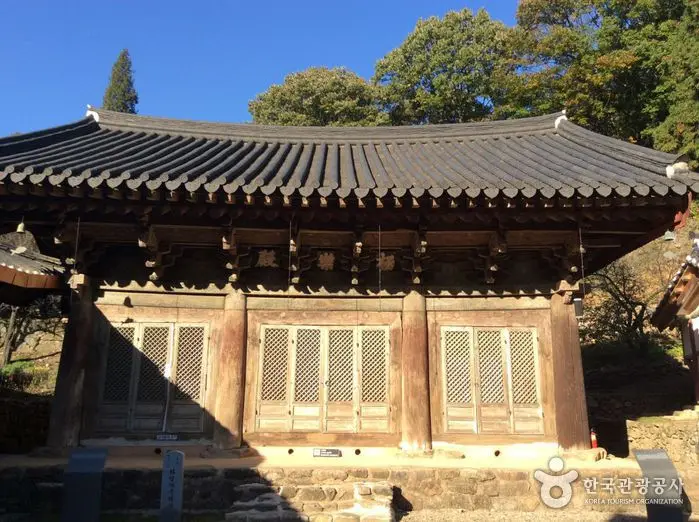
Hwaamsa Temple was founded by State Preceptor Ilgyo in the 3rd year of Queen Jinseong of Silla (694), and it is said that Seolchong also studied here for a time. Geungnakjeon Hall was built in 1425 with donations from Seong Dal-saeng; it is a haang-style building that was popular in China's Southern Dynasties period and is the only one of its kind in Korea. Uhwaru Pavilion is likewise a building that shows the features of ancient architectural style and is designated Treasure No. 662. The bronze bell made in the reign of Prince Gwanghae was cast by Hoyeong; it is called the "self-ringing bell" (jamyeongjong) because it was said to ring on its own to warn of danger whenever misfortune was about to befall the temple or the nation. With the primeval forest of Bulmyeongsan Mountain surrounding it like a folding screen and a clear-flowing valley stream, Hwaamsa is a place of charm where a visit to cultural heritage can be combined with rest.MoreLess
- 2
Songgwangsa Temple
송광사
Songgwangsa Temple is a thousand-year-old temple located in Soyang-myeon, Wanju-gun, Jeollabuk-do. Songgwangsa Temple of the Jogye Order of Korean Buddhism was founded in the 7th year of King Gyeongmun of Silla (867) by Master Bojo Chejing, the founding patriarch of the Nine Mountain Seon Schools. Its original name was Baengnyeonsa, and it was once a great temple whose one-pillar gate (ilju-mun) stood 3km outside the current site; but amid the changes of history it had fallen into near-ruin, until State Preceptor Bojo Jinul of Songgwangsa in Suncheon vowed to restore it. The temple buildings standing today were the result of a large-scale rebuilding project carried out in the 1600s by the dharma descendants of State Preceptor Bojo Jinul. MoreLess
- 3
Hwaamsa Temple
화암사
Hwaamsa Temple was founded by State Preceptor Ilgyo in the 3rd year of Queen Jinseong of Silla (694), and it is said that Seolchong also studied here for a time. Geungnakjeon Hall was built in 1425 with donations from Seong Dal-saeng; it is a haang-style building that was popular in China's Southern Dynasties period and is the only one of its kind in Korea. Uhwaru Pavilion is likewise a building that shows the features of ancient architectural style and is designated Treasure No. 662. The bronze bell made in the reign of Prince Gwanghae was cast by Hoyeong; it is called the "self-ringing bell" (jamyeongjong) because it was said to ring on its own to warn of danger whenever misfortune was about to befall the temple or the nation. With the primeval forest of Bulmyeongsan Mountain surrounding it like a folding screen and a clear-flowing valley stream, Hwaamsa is a place of charm where a visit to cultural heritage can be combined with rest. MoreLess
- 4
Songgwangsa Temple
송광사
Songgwangsa Temple is a thousand-year-old temple located in Soyang-myeon, Wanju-gun, Jeollabuk-do. Songgwangsa Temple of the Jogye Order of Korean Buddhism was founded in the 7th year of King Gyeongmun of Silla (867) by Master Bojo Chejing, the founding patriarch of the Nine Mountain Seon Schools. Its original name was Baengnyeonsa, and it was once a great temple whose one-pillar gate (ilju-mun) stood 3km outside the current site; but amid the changes of history it had fallen into near-ruin, until State Preceptor Bojo Jinul of Songgwangsa in Suncheon vowed to restore it. The temple buildings standing today were the result of a large-scale rebuilding project carried out in the 1600s by the dharma descendants of State Preceptor Bojo Jinul.MoreLess
- 5
Wibongsa Temple
위봉사
Traveling about 3km northeast from Songgwangsa Temple brings you to Oseong Village, said to have originally been called Oeseong, and from there climbing about 1.5km around Chuchulsan Mountain leads to the west gate of Wibongsanseong Fortress. The fortress originally consisted of stone walls 16km long, 4-5m high, and 3m wide, with three main gates and eight hidden gates (amun). Today only a small portion of the wall remains, along with just the west gate, leading toward Jeonju, among the original east, west, and north gates.MoreLess
- 6
Wibongsanseong County Park
위봉산성군립공원
Songgwangsa Temple also stands in Soyang-myeon, Wanju-gun, north of Jeonju, and the road leading to the temple is lined with a lush tunnel of cherry blossoms. Carried along by the drifting petals as you continue toward the foot of Wibongsan Mountain, you'll find attractions such as Wibongsanseong Fortress, Wibong Falls, Wibongsa Temple, and Dongsang Reservoir waiting for you, letting you savor several different travel delights all at once. MoreLess
- 7
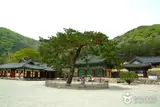
Wibongsa Temple
위봉사
Traveling about 3km northeast from Songgwangsa Temple brings you to Oseong Village, said to have originally been called Oeseong, and from there climbing about 1.5km around Chuchulsan Mountain leads to the west gate of Wibongsanseong Fortress. The fortress originally consisted of stone walls 16km long, 4-5m high, and 3m wide, with three main gates and eight hidden gates (amun). Today only a small portion of the wall remains, along with just the west gate, leading toward Jeonju, among the original east, west, and north gates. MoreLess
- 8
Wibongsanseong County Park
위봉산성군립공원
Songgwangsa Temple also stands in Soyang-myeon, Wanju-gun, north of Jeonju, and the road leading to the temple is lined with a lush tunnel of cherry blossoms. Carried along by the drifting petals as you continue toward the foot of Wibongsan Mountain, you'll find attractions such as Wibongsanseong Fortress, Wibong Falls, Wibongsa Temple, and Dongsang Reservoir waiting for you, letting you savor several different travel delights all at once.MoreLess
Source: Korea Tourism Organization (TourAPI) · Machine-translated