A Camping Trip to Enjoy Mountains and Sea Together
6 stops · 2 days
Uljin, with its great mountains, deep valleys, and coastline all in one, is an ideal place to enjoy mountains and sea together. Here you'll find the Sogwang-ri Geumgang Pine Forest, largely untouched by human hands, and, following Buryeong Valley, home to Buryeongsa Temple, you'll reach the Wangpicheon Stream and the sea. Past Mangyangjeong and Wolsongjeong pavilions, which also appear in Jeong Cheol's classic poem Gwandong Byeolgok, the coastline leading to Hupo is not only great for camping but also brings you to Hupo Port, rich with seafood.
- Duration
- 2 days
Along the way
- 1
Uljin Geumgang Pine Forest
울진금강소나무림
The Geumgang pine forest of Sogwang-ri, Seomyeon, Uljin County, Gyeongsangbuk-do, was designated and managed as a hwangjang bongsan (a royal forest reserved for coffin-wood pine) during King Sukjong's reign; it was later designated a breeding forest in 1959 and then a forest genetic resource reserve in 2001, making it famous enough to warrant this level of protection. It is a pristine area under special conservation management, home to the 'beauty pine' (miinsong) variety of Geumgang pine. Passing through the pine tunnel of this natural forest, over 500 years old, feels like walking an honor guard of Geumgang pines standing at attention. You can also breathe in the phytoncides, the plant-derived compounds released by the pine forest. MoreLess
- 2
Buryeongsa Temple
불영사
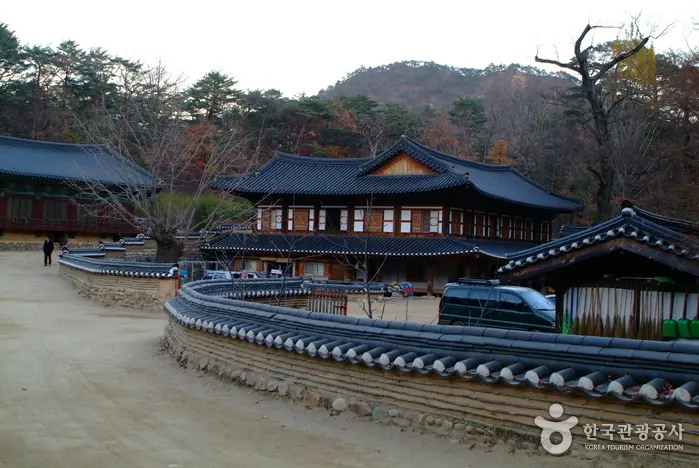
Located on the western slopes of Mt. Cheonchuksan about 20km west of Uljin-eup, Buryeongsa is an old Silla-era temple, and Buryeong Valley — a hidden gem of scenery stretching some 13km from the temple to Hawon-ri — unfolds around it. It was founded in 651 (the 5th year of Queen Jindeok) by Master Uisang and named Buryeongsa ('Temple of Buddha's Reflected Shadow') because the Buddha's image was said to be reflected in the temple pond. It burned down in 1396 (the 5th year of Joseon King Taejo) and was rebuilt the following year by Master Soun; further renovations followed in 1500, 1608, 1724, and 1899. MoreLess
- 3
Mangyangjeong Pavilion
망양정
Mangyangjeong stands on a hill near Mangyang Beach in Sanpo-ri, Geunnam-myeon, Uljin County. The beautiful scenery here has been passed down through poems and paintings. King Sukjong of Joseon, upon seeing a painting of the Eight Views of Gwandong, declared this the finest of them all and personally wrote the calligraphy 'Gwandongjeillu' (Finest Pavilion of Gwandong) to be sent and hung in the pavilion.MoreLess
- 4
Wolsongjeong Pavilion
월송정
Wolsongjeong is said to be named for four Silla hwarang — Yeongnang, Sullang, Namsok, and Anyang — who enjoyed the moon together in the dense pine forest here, or alternatively for the story that pine saplings were brought from the state of Yue (Wol) and planted here. Coastal pines form a forest around the pavilion, and looking out over the blue East Sea instantly gives a feeling of your heart opening wide. In particular, the sight of the sun rising over the pines of Wolsongjeong against the blue sea is widely known, drawing many tourists and photographers, and together with nearby Mangyangjeong, it is famous as one of the few great sunrise spots on Korea's east coast. MoreLess
- 5
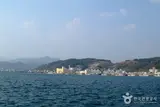
Uljin Hupo Port
울진 후포항
The mountain terrain of Uljin, Gyeongsangbuk-do, is bold and massive, unlike anywhere else in Gyeongsang-do. Its valleys run so deep that a few remote mountain villages, now rare to find, still remain here and there. Whether it's a point of pride or regret that Uljin was once part of Gangwon-do, the comparison is sometimes made to suggest just how much exceptional beauty its deep mountain valleys hold. Traveling up along Route 7, hugging the blue scenery of the East Sea, you pass Yeongdeok's Goraebul and Baekseok beaches before entering Uljin. MoreLess
- 6
Baegam Hot Springs
백암온천
Baegam Hot Springs is Korea's only sulfur spring containing natural alkaline radium, designated a Special Tourist Zone on December 31, 1979. Colorless and odorless, and maintaining a temperature of 53°C well suited to the human body, it's ideal for hot-spring bathing and is said to be effective for neuralgia, chronic arthritis, stroke aftereffects, and nerve paralysis. It is ranked among the leading hot springs on the East Coast, drawing a steady stream of bathers and vacationers from across the country. It also has a variety of rides, including a rotating swing and a Viking ship ride, making it a perfect rest spot for families. Nearby, the scenic beauty of Donghae Beach and Mt. Baegamsan lets visitors combine their hot-spring trip with swimming and hiking. MoreLess

Source: Korea Tourism Organization (TourAPI) · Machine-translated