A Camping Trip on Baekdudaegan's Maguryeong and Gochiryeong Passes
7 stops · 2 days
The Baekdudaegan mountain range is a constant companion along the road from Punggi to Buseok. Along the way you'll find priceless cultural heritage — Sosu Seowon, Korea's first Confucian academy, Seonbichon Village, which gathers together traditional houses from across Gyeongsangbuk-do, and Muryangsujeon Hall — before reaching the thousand-year-old temple Buseoksa, famous for its beautiful sunsets. From the Nahanjeon Hall at Seonghyeolsa Temple, with its beautiful latticework, to camping across Maguryeong and Gochiryeong passes, this is a journey to enjoy the Baekdudaegan's Sobaeksan foothills to the full.
- Duration
- 2 days
- Distance
- 74.2km
Along the way
- 1
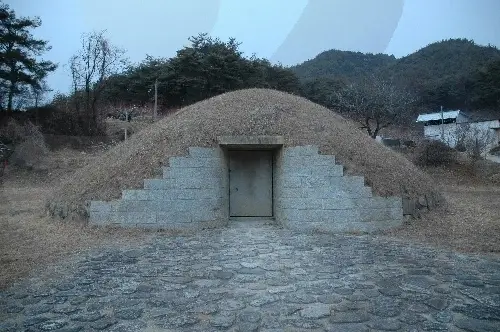
Yeongju Sunheung Mural Tomb
영주 순흥 벽화 고분
This mural tomb, excavated jointly by the Office of Cultural Properties and Daegu University in January 1985, is designated Historic Site No. 313 and is an extremely valuable resource both academically and as a cultural asset. Based on an inscription reading 'Gimijung myosangin-myeong' written on the south wall of the tomb's main chamber, the tomb is estimated to have been built around 539. Its internal structure is a stone-chamber tomb with an entry passage; passing through the passage leads to the main chamber where the body was laid, with a relatively raised bier on the chamber's east side where the coffin rested, and a smaller auxiliary bier set in the northwest corner of the chamber. MoreLess
- 2
Seonghyeolsa Temple
성혈사
Seonghyeolsa Temple (聖穴寺) is a temple of the Jogye Order of Korean Buddhism located at 277 Deokhyeon-ri, Sunheung-myeon, Yeongju, Gyeongsangbuk-do, on Mt. Sobaeksan. The Nahanjeon Hall enshrines Joseon-era arhat statues carved with exceptional skill, showing that Seonghyeolsa has long been a site of arhat worship. The hall itself was also built in the mid-Joseon period, and beyond its excellent architectural technique, the intricate, beautiful patterns carved into its doors are so striking they are considered among the finest examples of temple door ornamentation. MoreLess
- 3Yeongju Sosu Seowon
영주 소수서원
A short way from Punggi-eup, Yeongju, Gyeongsangbuk-do, toward Buseoksa Temple, Sosu Seowon stands on the right side of the road. It was Korea's first seowon to receive a royal charter. A seowon was a private Joseon-dynasty educational institution that honored and taught the legacy of past sages, with its basic facilities consisting of a shrine housing portraits for ancestral rites, a lecture hall for studying and discussing scholarship, and dormitories where students boarded. Sosu Seowon began in 1543 when Ju Se-bung, then magistrate of Punggi, built a shrine at the site of Suksusa Temple to honor Hoeheon An Hyang, whom he deeply admired. It was first named Baegundong Seowon, but after Toegye later took office as magistrate of Punggi, he petitioned for the seowon to receive formal recognition from the state. MoreLess
- 4
Lunch (Sunheung Traditional Mukjip, Seonbichon Jongga)
점심식사(순흥전통묵집, 선비촌종가집)
[Sunheung Traditional Mukjip] Buckwheat jelly (memil-muk) is made here by traditional methods handed down since olden times, keeping its original flavor intact; served together with foxtail-millet rice, it makes for a superb combination and a buckwheat jelly with the taste of home. [Seonbichon Jongga] Located on the market street at the entrance to Yeongju Seonbichon, selected as one of Korea's 'Stars of Tourism,' this is Seonbichon's signature restaurant. Its Yeongju cheonggukjang (fermented soybean stew) is made with locally grown buseoktae soybeans; the beans are large, no red pepper powder is used, and the flavor is mild and savory — and best of all, it's served in individual earthenware pots for hygiene. MoreLess
- 5Seonbichon Village
선비촌
As a center for the origins of Confucian culture, Seonbichon aims to carry on the spirit of the old scholar-gentlemen, turning it into a tourism resource by recreating the scholarly pursuits and traditional lifestyles of past sages, promoting future-oriented development of the tourism industry, and serving as an educational site for experiencing Korea's traditional ideas and ways of life. MoreLess
- 6Maguryeong and Gochiryeong Passes
마구령 고치령
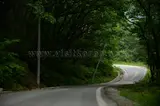
As the Baekdudaegan, running south, passed Mt. Taebaeksan and turned west, it laid out the great mountain of Sobaeksan at the center of the peninsula. Forming a high, rugged range along the border of Chungcheongbuk-do and Gyeongsangbuk-do, this area was once a fierce battleground among the Three Kingdoms. Afterward, several mountain passes were cut through the high peaks, and from then on Sobaeksan came to serve not as a barrier but as a vital transportation hub linking the exchange of culture and goods among Yeongnam, Gyeonggi, and Chungcheong. MoreLess
- 7
Buseoksa Temple
부석사
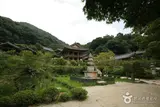
Buseoksa Temple is the head temple of the Hwaeom (Avatamsaka) school, founded in 676 (the 16th year of Silla King Munmu) by royal order under Master Uisang, founding patriarch of Korea's Hwaeom school. While studying in Tang China, the master heard news of Tang Emperor Gaozong's plan to invade Silla and reported it to the king; he then returned home, hoping to use the Hwaeom teachings he had mastered to unify public opinion and help the nation overcome its internal and external trials, and founded this temple, which became the wellspring of Hwaeom thought in Korea. MoreLess
Source: Korea Tourism Organization (TourAPI) · Machine-translated