A Quiet Time in Hangae Village
5 stops · 7 hours
Hangae Village in Seongju, set on what is said to be Yeongnam's finest auspicious site, is a single-clan village of the Seongsan Lee family and one of only seven whole villages designated as Important Folklore Cultural Heritage. Traditional old houses built during the Joseon dynasty — including Bukbi Old House, Hanju Head House, Gyori-daek, and Hahoe-daek — retain their original appearance, and the old walls linking the village are designated Registered Cultural Heritage, making it a great place to experience traditional culture.
- Duration
- 7 hours
- Distance
- 47.7km
Along the way
- 1
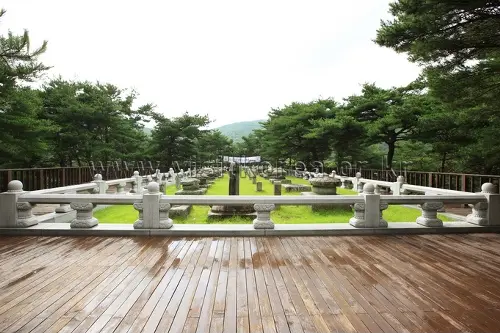
Placenta Chambers of King Sejong's Sons
세종대왕자 태실
Taesil (placenta chambers) of Joseon princes — this is the taesil site of the sons of King Sejong. There are 11 chambers in the front row and 8 in the back row of this Joseon-dynasty complex. In front of each chamber stands a memorial stele for that prince, most believed to have been erected between 1438 and 1442 (Sejong's 20th to 24th years). Many of the steles are too worn to read, but the legible ones include, among others, those of Prince Pyeongwon, Prince Yeongeung, and Prince Uichang. However, in December 1977, during restoration and maintenance work here, earthenware, placenta jars, a buncheong stamped-pattern bowl, a set consisting of a buncheong inlaid lotus-pattern lid, and two epitaph stones bearing inscriptions were excavated from spots believed to be the taesil of Prince Geumseong, Prince Hwaui, and King Danjong. MoreLess
- 2
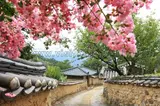
Seongju Hangae Village
성주 한개 마을
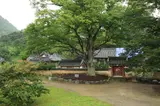
Seongju Hangae Village is a classic single-clan village where the Seongsan Lee family has lived for generations. Lee U, who served as magistrate of Jinju under King Sejong of Joseon, first settled here and founded the village. Today it is home to the descendants of Wolbong Lee Jeong-hyeon, forming a single-clan community, and it is preserved as a traditional hanok village. MoreLess
- 3
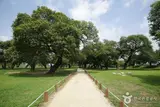
Seongju Gyeongsan-ri Seongbat Forest
성주 경산리 성 밖 숲
A forest of willow trees planted outside the walls of old Seongju-eupseong, in Gyeongsan-ri, Seongju-eup, Seongju County, Gyeongsangbuk-do. A traditional 'protective village forest' rooted in local feng shui, history, culture, and folk belief, it carries both local character and historical significance. According to oral tradition, in the mid-Joseon period, children in the village outside the West Gate kept dying for no apparent reason. It was said this was because Jokduri Rock and Tanggeon Rock near the village faced each other, and a geomancer advised that planting a forest at the midpoint would ward off the calamity. Accordingly, a chestnut forest was planted along the Icheon stream outside the West Gate of Seongju-eupseong, an earthen-walled town. After the Japanese invasions, when village discipline loosened and public sentiment grew unsettled, the chestnut trees were cut down and willows were planted instead, giving rise to the forest as it stands today, now used near the town center for rest, exercise, and events. MoreLess
- 4
Hoeyeon Seowon
회연서원
Hoeyeon Seowon began as Hoeyeon Chodang, a thatched study hall founded by the mid-Joseon Neo-Confucian scholar Hangang Jeong Gu to cultivate talented students. After Jeong Gu passed away, his disciples built a seowon on the site of the study hall to honor him as its principal figure, naming it Hoeyeon Seowon. The seowon received a royal plaque in 1690 (King Sukjong's 16th year), and while it played its part in honoring past sages and providing local education, producing many talented figures, it was shut down during the Daewongun's abolition of seowon. In recent years, centered on the study hall building that survived demolition, the east and west study wings, the gate tower, and an artifact exhibition hall have been built and the walls restored, returning the site to its full form as a seowon. MoreLess
- 5
Dogyongsanseong Fortress
독용산성
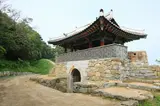
Located in Geumbong-ri, Gacheon-myeon, Seongju County, Dogyongsanseong Fortress sits atop the 955m Mt. Dogyongsan, a peak of Mt. Sudosan, the main summit of the Sobaek mountain range. The fortress wall runs 7.7km (2.5m high, 1.5m wide); with abundant water sources inside and ample usable space, it was built as a pogok-sik sanseong (a valley-enclosing mountain fortress) designed to withstand prolonged combat, and is the largest such fortress built in the Yeongnam region. The exact date of construction is unknown, but it is presumed to have been built about 1,500 years ago during the Seongsan Gaya period, and is said to have been discovered while people were taking refuge there during the Japanese invasions. MoreLess
Source: Korea Tourism Organization (TourAPI) · Machine-translated