Walking Hwarimdong Valley in Hamyang, Land of the Yangban
5 stops · 7 hours
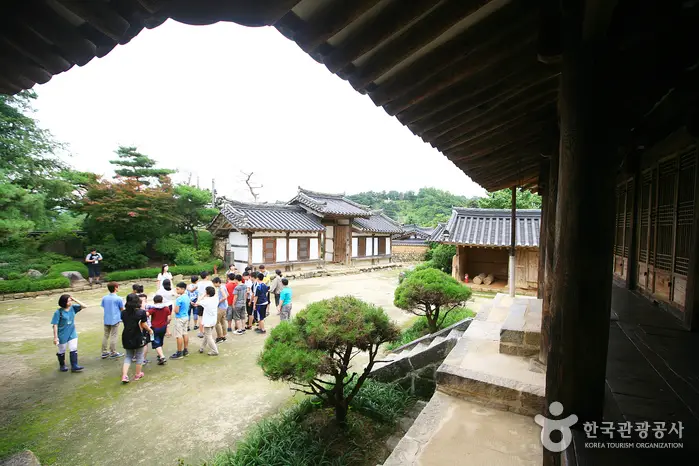
Along with Andong, Hamyang is one of Gyeongsangdo's leading yangban towns. It is the hometown of Jeompiljae Kim Jong-jik, and you can visit his tomb and the seowon (Confucian academy) dedicated to him. Fittingly for a scholarly town, the road over Yuksimnyeong Pass passes through Hwarimdong Valley, where pavilions once used by scholars for reciting poetry and relaxing still stand. The area has been developed into the Seonbi Culture Trail, and it's a pleasant walk strolling along the valley past the pavilions.
- Duration
- 7 hours
- Distance
- 44.6km
Along the way
- 1Gaepyeong Hanok Village
개평한옥마을
Gaepyeong Hanok Village was first settled by the Gyeongju Kim and Hadong Jeong clans in the 14th century, and the Pungcheon No clan is said to have moved in during the 15th century. Today the village is home mostly to the Pungcheon No and Hadong Jeong clans. Gaepyeong is well known for Jirisan Solsongju, a homemade liquor with a 530-year tradition. Brewed with pine needles according to a recipe passed down through generations of the Hadong Jeong clan, it was restored and developed for sale by descendants in 1997. Every alley of Gaepyeong Hanok Village is lined with head-family houses and old residences. Walking the lanes, you'll pass traditional houses such as the Hadong Jeong Old House, said to have been built in 1880, the Odam Old House built in 1838, and the head house of the Pungcheon No clan. MoreLess
- 2Namgye Seowon
남계서원
Namgye Seowon was built in 1552 (the 7th year of King Myeongjong of Joseon) to honor the scholarship and virtue of Jeong Yeo-chang and to educate the local people in Confucian learning. In 1566 (King Myeongjong's 21st year), the state granted it the royal plaque 'Namgye,' giving it official recognition and financial support. Burned down during the Japanese invasion of 1597, it was rebuilt at Nachon in 1603 (King Seonjo's 36th year), then rebuilt again at its original site — its present location — in 1612 (the 4th year of Gwanghaegun). During King Sukjong's reign, Gang Ik and Jeong On were added to those honored there. A separate shrine was later built to honor Yu Ho-in and Jeong Hong-seo, but it was demolished in 1868 (the 5th year of King Gojong). MoreLess
- 3
Yongchu Valley and Yongchu Falls, Mt. Gibaeksan
기백산 용추계곡과 용추폭포
This is an ideal spot for those who love clear valleys and dense old-growth forest, and for anyone wanting a few hours of hiking. In the old Anui County, three places of exceptional scenery were said to exist, known together as the 'Three Valleys of Anui.' Yongchu Valley here is also called Simjindong, meaning 'the place where one falls into a meditative absorption in truth because of the valley's deep beauty.' Just past the entrance to Yongchu Valley stands Simwonjeong Pavilion, the essence of Simjindong. Built by descendants in 1806 (the 3rd year of King Gojong) at the spot where the Confucian scholar Donam Jeong Ji-yeong used to relax, the plain, antique pavilion looks out over Cheongsindam Pool — said to clear even the mind of those who climb up — and a jumble of granite boulders stacked in layers, all visible in a single sweep. Following the road up from here, plaques recording legends and origins are set up throughout the valley. MoreLess
- 4
Lunch (Anui Wonjo Galbi)
점심식사(안의 원조갈비집)
[Anui Wonjo Galbi] A locally famous galbi restaurant that has been passed down through the family for 30 years since it opened in 1962. Its seasoned galbi soup, made with homemade traditional soy sauce, is the restaurant's pride. [Geumsugangsan] Known for spicy catfish stew made with pond-raised catfish, pesticide-free wild-greens bibimbap, a variety of dishes made from native-breed chicken, and acorn jelly made from wild acorns gathered on Mt. Hwangseoksan. MoreLess
- 5
Hwarimdong Valley
화림동계곡
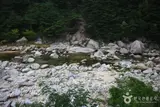
Hwarimdong Valley stretches some 60 ri as the Geumcheon Stream (upper reaches of the Namgang River), rising from the 1,508m Mt. Namdeogyusan, flows down through Seosang and Seoha, carving unusual rocks and pools along its banks. By the time it reaches Nongwoljeong Pavilion, jade-clear water flows over broad flat rock, blending with pine trees to create scenery like the legendary land of Mureungdowon. True to its reputation as the mecca of Korea's pavilion culture, the valley is dotted throughout with countless pavilions and striking rock formations spread across its wide flat stone beds. MoreLess
Source: Korea Tourism Organization (TourAPI) · Machine-translated