Along Hwagaecheon Stream: Bright Cherry Blossoms and Deep Tea Fragrance
4 stops · 7 hours
Every early April, Hadong puts on a spectacular display along the 4km cherry blossom road running from Hwagae Market to Ssanggyesa Temple. Starting at Hwagae Market, which links Jeolla-do and Gyeongsang-do, and walking the blossom-lined path to Ssanggyesa, you'll be enveloped in the rich scent of spring. Hadong is also well known as the birthplace of Korean tea cultivation, and hosts a Wild Tea Culture Festival every May.
- Duration
- 7 hours
- Distance
- 25.4km
Along the way
- 1Dosim Tea Garden
도심다원
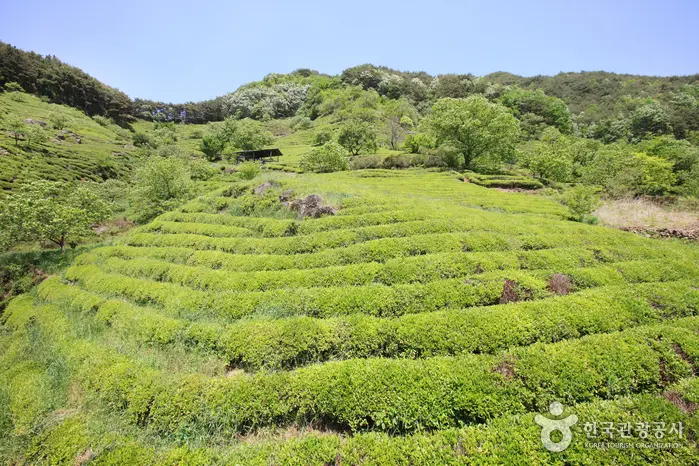
Dosim Tea Garden, home to Korea's oldest tea trees, sits deep in Hwagae on the south-facing slopes of Jirisan. To the south, the Seomjin River flows on to the South Sea, and Hwagae Market — bordered by 3 provinces, 2 cities, and 5 counties — was once famed as one of Korea's ten great markets. Alongside the cherry blossom road linking Ssanggyesa and Chilbulsa temples flows the clearest stream in the country, Hwagaecheon. Hwagaedongcheon is the birthplace of Korean tea cultivation, the tea region where Master Choui wrote the Dongdasong (Song of Korean Tea). MoreLess
- 2
Lunch (Danya Restaurant, Ssanggye Suseokwon Restaurant)
점심식사(단야식당, 쌍계수석원식당)
[Danya Restaurant] The owner, who has run this spot for 20 years, looks as warm and familiar as a next-door neighbor, but takes great pride in her food. To anyone who complains about the food, she's known to say, 'Don't make the food fit your mouth — fit your mouth to the food.' That confidence comes through fully in the flavor, and the place is known locally as a real find. [Ssanggye Suseokwon Restaurant] The freshly made nutritious stone-pot rice is cooked for about 20 minutes in a stone pot with rice, glutinous millet, black beans, red beans, and green beans, black rice, mugwort rice, jujubes, and chestnuts, all grown in Jirisan, then mixed with bracken, chwinamul greens, mushrooms, taro stems, native red pepper paste, sesame, and perilla seeds, along with home-pressed sesame oil — and you can also savor the rich flavor of the scorched-rice tea (sungnyung) that forms in the stone pot. The restaurant also displays around three thousand suseok viewing stones, so you can take in a stone collection while you eat.MoreLess
- 3
Ssanggyesa Tea Tree Birthplace
쌍계사차나무시배지
The Ssanggyesa Tea Tree Birthplace is a place that reveals the history of Korean tea; wild tea fields still remain here today and are protected as a designated monument. In the 3rd year of Silla King Heungdeok, Daeryeom brought green tea seeds from Tang China and, by royal order, first planted them around Jirisan; in the king's 5th year, Master Jingam then propagated the tea further. The tea here is called jungno-cha ('bamboo dew tea') or jakseol-cha, so named because it is made from leaves that grew feeding on bamboo dew. MoreLess
- 4
Ssanggyesa Temple
쌍계사
About 21km from Gurye-eup in Jeollanam-do, along the 6km stretch from Hwagae-ri to Unsu-ri in Hwagae-myeon, Hadong County, Gyeongsangnam-do, cherry trees line the road, and on the southern foot of Jirisan here stands Ssanggyesa Temple, founded in 722 (the 21st year of Silla King Seongdeok) by Master Sambeop, a disciple of Master Uisang. It was first named Okcheonsa, but after Master Jingam rebuilt it into a great temple in 840 (the 2nd year of King Munseong), King Jeonggang, admiring the master's spiritual influence, renamed it 'Ssanggyesa' in 887. MoreLess
Source: Korea Tourism Organization (TourAPI) · Machine-translated