A Journey Following the Traces of Admiral Yi Sun-sin
5 stops · 7 hours
Tongyeong, short for Samdo Sugun Tongjeyeong (Naval Headquarters of the Three Provinces), preserves many relics of Admiral Yi Sun-sin. You can trace his legacy at Chungnyeolsa Shrine, which displays the Eight Imperial Gifts bestowed by the Ming emperor; Sebyeonggwan, one of Korea's largest historic wooden buildings; and Jeseungdang, once the site of the Samdo Sugun Tongjeyeong naval headquarters. The sunset viewed from Dara Park is like a bonus to any trip to Tongyeong.
- Duration
- 7 hours
- Distance
- 21.8km (incl. about 7km by sea)
Along the way
- 1
Hansando Island
한산도
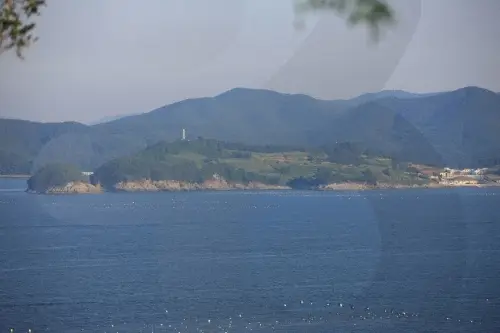
Hansando is where the Samdo Sugun Tongjeyeong naval headquarters was first established during the Imjin War, and the surrounding waters, Hansan Strait, are the historic site of the Battle of Hansan, a battle that shines brilliantly in world naval history. There is hardly a place name here unconnected to Admiral Yi Sun-sin, making this a storied island where his patriotic spirit still seems to live and breathe. Though at the heart of Hallyeohaesang National Park, it is known less for its natural beauty alone than as a historic site, better known through the sijo poem expressing Admiral Yi's patriotic sentiment beginning 'On a moonlit night at Hansan Island…' Hansando's Jeseungdang is famous as a historic site associated with Admiral Yi, but the scenery of Hansan Bay is also so beautiful it resembles a landscape painting unrolled before you, drawing visitors year-round. MoreLess
- 2Dongpirang Village
동피랑마을
The name 'Dongpirang' comes from combining 'dong' (east) and 'birang.' 'Birang' is the Tongyeong dialect word for 'slope,' with 'dong' (east) attached in front — hence people came to call it 'Dongpirang.' In October 2007, the Green Tongyeong 21 Council recruited people from across the country to paint murals along the Dongpirang path. They covered the village's walls and alleyways with paintings, and this hillside seaside village was reborn through art. Dongpirang's alleys branch off in dozens of directions. Every alley has murals, and this village that seems to touch the sky, painted the way it is, is enough to turn it into a fairy-tale town. The view of Ganggu-an Bay looking down from the village is also worth seeing. MoreLess
- 3Chungnyeolsa Shrine
충렬사
This shrine was built in 1606 (39th year of King Seonjo), by the 7th Tongjesa (naval commander) Yi Un-ryong, by royal decree, to honor and commemorate Admiral Yi Sun-sin's achievements. The grounds include the shrine hall enshrining Admiral Yi's memorial tablet, along with five gates — Naesammun, Jungmun, Oesammun, Jeongmun, and Honsalmun. Inside Jungmun are the Dongjae and Seojae halls, where ritual offerings were once prepared for memorial rites; inside Oesammun are Sungmudang, which handled administrative affairs, and Gyeongchungjae, where talented students were once trained; to the left and right of Oesammun are six stone monument pavilions including the Chungnyeolmyobi stele; and outside Oesammun are Ganghallu Pavilion, restored in 1988, and an exhibition hall. The plaque reading '忠烈祠 (Chungnyeolsa)' hanging today on the main hall and Oesammun is a royal plaque bestowed by King Hyeonjong, said to have been written by Song Jun-gil (諡 Munjeonggong). MoreLess
- 4Tongyeong Sebyeonggwan
통영 세병관
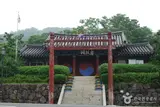
Sebyeonggwan is the guesthouse of the Tongjeyeong naval headquarters, completed on July 14, 1605 (38th year of King Seonjo), the year after the 6th Tongjesa Yi Gyeong-jun moved the headquarters to Duryongpo in this region. Sebyeonggwan is a grand single-story hip-and-gable building, nine bays across the front and five bays deep, left fully open without windows, doors, or walls throughout. Part of the center of its wood-plank floor is raised one step, believed to be where the royal tablet was once enshrined. Round pillars stand on foundation stones set atop a long stone platform, connected at the top by changbang beams. The bracket sets are of the jusimpo type, built up only atop the columns, but show many features of both ikgong and dapo styles. Between the columns, hwaban blocks are placed directly on the changbang to support the jusimdori purlin plate. The roof frame is an 11-purlin (sipilyangga) structure, with a large beam spanning both sides and topped with dongjaju posts supporting a middle beam, then further dongjaju posts supporting a ridge beam. Atop the ridge beam stands a daegong post supporting the jongdori ridge purlin. Between the inner and front columns run toebo beams. The eaves are double eaves, forming a hip-and-gable tiled roof, with the ridge, gable ridges, and hip ridges all finished with yangseong (lime plaster) work. MoreLess
- 5
Dara Park
달아공원
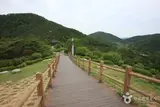
If Mireuksan boasts the best sunrise view, Dara Park boasts the best sunset view in the country. It lies partway along the 23km Sanyang Coastal Road that circles the coast of Mireukdo Island south of Tongyeong. The name 'Dara' comes from the local terrain resembling an elephant's tusk, though today it's also said to mean 'a good place to view the moon (dal).' Locals in Tongyeong often also call it 'Darae.' MoreLess
Source: Korea Tourism Organization (TourAPI) · Machine-translated