Savoring the Scent of Three Kingdoms History and Green Tea
3 stops · 6.5 hours
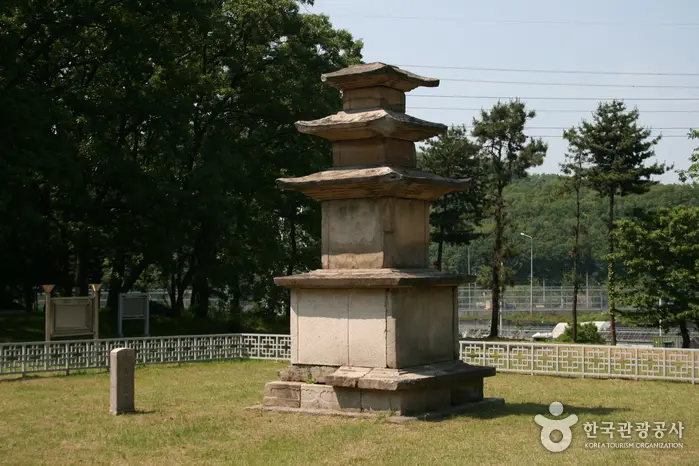
Iseongsanseong Fortress and Dongsaji are traces of a fiercely contested mountain fortress and a temple site from the Three Kingdoms period. Iseongsanseong is presumed to be an important site from Baekje's Hanseong period, but is also known as a fortress built after Silla secured the Han River basin. Dongsaji is a Unified Silla temple site, where the Chungungni Five-Story Stone Pagoda and Three-Story Stone Pagoda remain. Tibelt lets you encounter a green tea field and enjoy a green tea experience in the capital region, without having to travel as far as Boseong in Jeollanam-do or Hadong in Gyeongsangnam-do, both famous for tea.
- Duration
- 6.5 hours
- Distance
- 11.4km
Along the way
- 1
Hanam Dongsaji
하남동사지
Hanam's 'Chungungdong Dongsaji' is a temple site located on a hillside beside Gogol Reservoir, south of Iseongsan Mountain. In 1983, roof tiles inscribed with characters such as 'Dongsa (桐寺),' 'Sinyu Gwangju Dongsa (辛酉廣州桐寺),' and 'Heungguk Samnyeon (興國三年)' were discovered here, drawing attention. MoreLess
- 2
Hanam Iseongsanseong Fortress
하남 이성산성
On September 16, 2000, the fortress and its surrounding area were designated Historic Site No. 422. Built of granite on Iseongsan Mountain (209.8m) in Hanam, it is an S-shaped pogok-hyeong (valley-enclosing) mountain fortress, with walls 4-5m high, a perimeter of 1,925m, and an interior area of 155,025 square meters. It is notable for its roughly 2km of walls built with stones shaped like corn kernels. MoreLess
- 3
Misari Rowing Park
미사리 경정공원
The Misari Rowing and Canoe Course along the Han River is a citizens' resting space along Olympic Boulevard, appearing before you reach Paldang Bridge as you head toward Hanam. Recently, a cluster of live-music cafes and specialty restaurants has sprung up nearby, making it a popular weekend date spot for young couples as well. MoreLess
Source: Korea Tourism Organization (TourAPI) · Machine-translated