A Drive and Culinary Journey Along Baegun Lake
5 stops · 5.5 hours
Baegun Lake is an artificial lake completed in 1953, surrounded like a folding screen by Cheonggyesan, Baegunsan, and Moraksan Mountains. With its beautiful scenery and the many restaurants and cafes clustered around it, it is well known as a drive or date course, not just a scenic route. You can also visit Baegunsa Temple on Baegunsan, Cheonggyesa Temple on Cheonggyesan, and Hauhyeon Catholic Church, which boasts a 100-year history.
- Duration
- 5.5 hours
- Distance
- 20.6km
Along the way
- 1
Baegunsa Temple
백운사
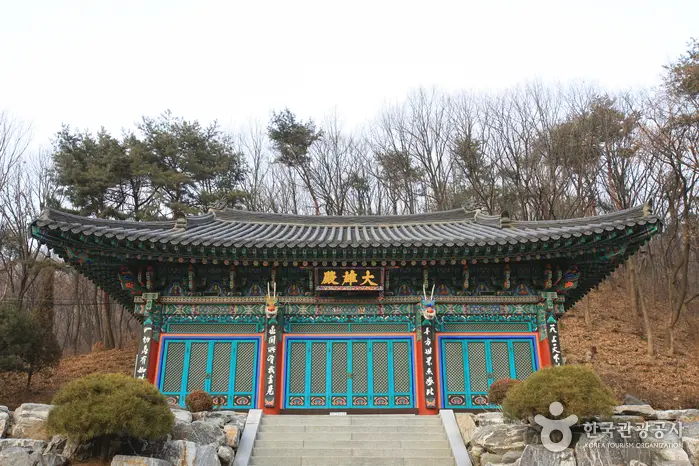
Baegunsa Temple is located at San 4-1, Wanggok-dong, Uiwang-si, Gyeonggi-do. It lies up the slope of Baegunsan Mountain past the Cheongpung Kim clan village at the foot of the mountain, on the mountain's western hillside, with the mountain located on the eastern side of Uiwang. This area once belonged to the former Yeongpyeong-hyeon county. Baegunsa, an affiliated temple of Yongjusa — the head temple of the 2nd district of the Jogye Order of Korean Buddhism — is located at San 4-1, Wanggok-dong, Uiwang-si, on the western hillside of Baegunsan (白雲山). MoreLess
- 2Baegun Lake
백운호수
An artificial lake completed in 1953, Baegun Lake sits within an area of about 826,450 square meters (250,000 pyeong) of flat land at the point where Cheonggyesan to the northeast, Baegunsan to the southeast, and Moraksan to the west meet, surrounding it like a folding screen; of this, 363,638 square meters (110,000 pyeong) make up the lake itself. It was originally created to supply agricultural water, but has since become a popular resort for both Uiwang residents and nearby metropolitan-area residents, thanks to its beautiful surrounding scenery, clean air, and well-maintained large parking lot and lakeside circular road. At Baegun Lake, you can enjoy live music cafes, motorboats, and various specialty restaurants, and the circular lakeside road makes for a fine drive or date course. MoreLess

- 3
Lunch (Songiyang, Beodeunamujip)
점심식사(송이향, 버드나무집)
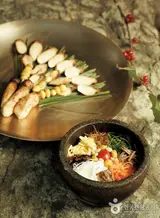
[Songiyang] A Baegun Lake landmark, "Songiyang" is a Korean set-meal (hanjeongsik) restaurant that has kept its flavor for many years. Located with a clear view of Cheonggyesan Mountain and Baegun Lake, Songiyang continues the 30-year know-how of "Anyang Beoseotjip" and insists on using only pure domestic seasonal mushrooms, including pine mushrooms, in its various natural mushroom dishes. [Beodeunamujip] Located right next to the recently well-known Uiwang Baegun Lake, this restaurant has fine views and is easy to find right off the main road. The view of Baegun Lake from the second floor is a point of pride. The second floor also has parasols set up, so on a nice day you can dine outdoors in the fresh air. The restaurant's most confident offerings are nutritious stone-pot rice and braised crucian carp. Not only are they delicious, but the care put into the side dishes that come with them is evident. The number of side dishes varies with the season but usually numbers around six or seven. MoreLess
- 4
Hauhyeon Catholic Church
하우현 성당
In 1884, Hauhyeon took shape as a Catholic gongso (mission community), regularly visited and evangelized by Father Mutel and others. At that time, the Korean Catholic Church was still under persecution, so Father Mutel disguised himself in mourning clothes to visit Hauhyeon secretly. With the establishment of the Korea-France Treaty in 1886, religious freedom began to be permitted for the Korean Catholic Church. In July 1888, the year after the treaty was ratified, Wangrip (Gatdeungi) was the first to be promoted to a full parish, overseeing Hauhyeon as its mother parish. MoreLess
- 5
Cheonggyesa Temple
청계사
Not far from Baegun Lake stands a temple once famous for its udumbara flower. This rare flower, said to bloom on Buddha statues, appeared at Cheonggyesa Temple on Cheonggyesan Mountain. Founded in the Unified Silla period and rebuilt in the 10th year of King Chungnyeol of Goryeo (1284), Cheonggyesa has much worth seeing, including the Cheonggyesa Sajeokgi Stele, Geungnakbojeon Hall, a bell pavilion, Samseonggak Hall, Jijangjeon Hall, three monks' quarters including a washing pavilion, and Gamnoji Pond. Cheonggyesa's woodblocks, designated Gyeonggi-do Tangible Cultural Property No. 135, currently number 18 sets, 466 blocks in total. Of these, the Lotus Sutra (Myobeopyeonhwagyeong), carved in the 14th year of King Gwanghaegun of Joseon (1622), makes up the largest portion with 213 blocks. Other surviving items include texts on Buddhist rituals, the Thousand Character Classic, and the 'Cheonji Palyang Sinjugyeongpan.' MoreLess
Source: Korea Tourism Organization (TourAPI) · Machine-translated