Tasting the History of Budae-jjigae
5 stops · 6 hours
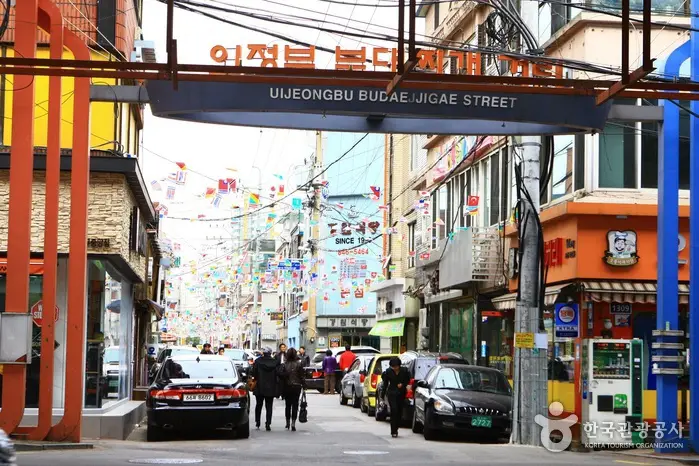
Budae-jjigae, meaning 'army base stew,' made with meat that came from US military bases, originated in Uijeongbu. Having become a US military town after the Korean War, Uijeongbu has a Budae-jjigae Street and a real claim to expertise in the dish. The area also embraces Dobongsan, Sapaesan, and Suraksan mountains, where you can visit Mangwolsa Temple on Dobongsan and Sarangchae, which preserves traces of scholar Seogye Park Se-dang, on Suraksan.
- Duration
- 6 hours
- Distance
- 20.5km (incl. 4.2km round-trip walk to Mangwolsa Temple)
Along the way
- 1Damdaheon Experience Education Center
담다헌 체험교육관
Damdaheon is a rice cake (tteok) experience education center located in Geomundol (Black Stone) Village, Sangok-dong, Uijeongbu, Gyeonggi-do. It was founded by Park Kyung-ae, a rice cake master certified by Gyeonggi-do, and opened on October 23, 2009. A place with much to enjoy and learn, Damdaheon runs hands-on programs including rice cake making (tteok cakes), yanggaeng (sweet bean jelly) making, meju (fermented soybean block) making, jang (fermented sauce) making, kimjang (kimchi making), and tofu making, as well as a weekend farm (allotted annually). Through hands-on experience, it works to introduce healthy traditional foods to children and teens accustomed to instant and Western-style diets, and to promote Korean rice cakes widely so families can make their own using Damdaheon's simple recipes. Damdaheon was designated an Outstanding Experience Space by the Ministry for Food, Agriculture, Forestry and Fisheries on December 24, 2010. MoreLess
- 2Uijeongbu Budae-jjigae Street
의정부 부대찌개거리
Uijeongbu's representative Budae-jjigae Street, where restaurants have sprung up one by one since 1998, is known for its stew that mixes ham, sausage, ground beef, kimchi, gochujang (red pepper paste), and vegetables and seasonings. MoreLess
- 3
Lunch (Boyeong Sikdang, Gosan Ddeokgalbi)
점심식사 (보영식당, 고산떡갈비)
[Boyeong Sikdang] The original 'budae-jjigae.' But now it has evolved into a hearty stew packed with sausage, ham, and various noodles, and its reputation has grown nationwide; among these, Uijeongbu's budae-jjigae is so well regarded it is even called 'Uijeongbu-jjigae,' and one of its most representative restaurants is 'Boyeong Sikdang.' Be sure to try the deep, spicy flavor that comes from its homemade barley gochujang and kimchi. [Gosan Ddeokgalbi] Made from top-quality Korean beef short rib meat, the ddeokgalbi (grilled short rib patties) is cut and seasoned each evening in just the amount needed for the next day, aged overnight, then grilled to order on a wire grill each morning — resulting in less fat and rich juices that bring out the meat's natural flavor. The restaurant has been run by the same family since it was founded in 1979. MoreLess
- 4
Mangwolsa Temple
망월사
Mangwolsa Temple sits on Dobongsan Mountain, known for its striking rock peaks such as Jaunbong, Manjangbong, Seoninbong, and Jubong. The route up to Mangwolsa either passes Daewonsa, Wonhyosa, and Gwangbeopsa in turn from the ticket office, or follows the Wondobong Valley; either trail eventually reaches Podae Ridge. Mangwolsa was founded in the 8th year of Queen Seondeok of Silla (639) by the monk Haeho at the queen's command, to pray for the prosperity of the royal family. MoreLess
- 5
Seogye Park Se-dang's Sarangchae
서계박세당 사랑채
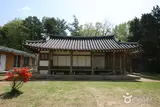
This building is where Seogye Park Se-dang (1629-1703), a Silhak (practical learning) scholar of the late Joseon period, carried out his writing. He passed the state examination in 1660 (1st year of King Hyeonjong of Joseon) and held various government posts, but retired from office at age 40 and devoted himself here to scholarship and educating future generations. Drawing on his own farming experience, he also wrote his representative agricultural treatise, 'Saekgyeong.' The house originally had the scale of a late-Joseon scholar-gentry household, with a main women's quarters, inner sarang, outer sarang, and servants' quarters, but most of it was destroyed during the Korean War, leaving only the outer sarangchae standing today. The sarangchae measures five bays across the front and two and a half bays deep, with an attached nu-maru (raised wooden floor) giving it an 'Eul (乙)'-shaped layout. Facing west with Suraksan Mountain to the east behind it, the sarangchae faces toward the left. MoreLess
Source: Korea Tourism Organization (TourAPI) · Machine-translated