The Wisdom of Pouring Rice to Look Like Water
3 stops · 6 hours
Dokjanseong Fortress is the site of a famous story from the Imjin War, when General Gwon Yul poured rice over his horse to make it look as if the fortress had plenty of water, tricking the Japanese army into lifting its siege and withdrawing — allowing Gwon Yul to defeat them. Along the way, you can also visit Bojeoksa Temple and the Dokjanseong Forest Bathing Area in turn. Mulhyanggi Arboretum, created around the theme of the meeting of water, trees, and people, is an arboretum located in the city where forest and urban surroundings blend well together.
- Duration
- 6 hours
- Distance
- 6km
Along the way
- 1
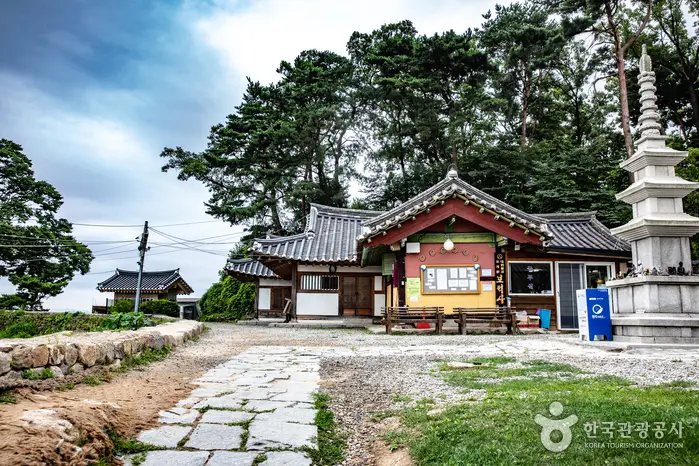
Bojeoksa Temple
보적사
According to the temple records of Yongjusa's affiliated temples, Bojeoksa's main hall was originally Yaksajeon, enshrining the Medicine Buddha (Yaksayeorae), who is said to satisfy all beings' needs — curing illness, extending life, dispelling calamity, providing clothing and food — and to help them attain the truth of supreme enlightenment through the Buddha's practice. This hall shared its long history with Dokjanseong Fortress, but during construction work by the monk Dogwang Jeongun in 1990, a newly rebuilt main hall of three bays by two bays enshrining Sakyamuni Buddha was completed, and its name was changed to Daeungjeon, as it remains today. MoreLess
- 2
Osan Dokjanseong Fortress and Semadaeji
오산 독산성과 세마대지
Dokjanseong Fortress is designated a historic site; the main wall runs a total of 1,100m, with the inner wall reaching 350m, making it a modest-sized mountain fortress. The exact date of its original construction is unclear, but its location — forming a pincer formation with Goseong between Yongin and Yangji and with Namhansanseong Fortress — gave it strategic value in securing the gateway to the capital, showing that it was a very important site. Records indicate it was originally an old fortress built by Baekje, and remained a strategic military site through Unified Silla and Goryeo. Doksan was originally called Seokdaesan or Hyangnobong, and was called Dokjanseong during the Joseon dynasty; but owing to the ingenious military tactics General Gwon Yul used here during the Imjin War, it is now also called 'Semasan' or 'Semadae.' At the summit stands a pavilion bearing a plaque reading 'Semadae' in the handwriting of President Syngman Rhee. MoreLess
- 3Mulhyanggi Arboretum
물향기수목원
Amid dense high-rise apartment blocks lies a beautiful forest resting place — the 'Gyeonggi-do Mulhyanggi Arboretum' in Osan. Spanning about 330,000 square meters (100,000 pyeong), this arboretum offers as much to see as its pretty name suggests. Built within the Gyeonggi-do Forestry Research Institute in Sucheong-dong, Osan, over six years of effort, Mulhyanggi Arboretum has 16 themed gardens, various amenities, and 1,601 plant species. A pleasant place to stroll with family, friends, or a loved one, it takes about two hours to tour slowly and is not a small arboretum. MoreLess
Source: Korea Tourism Organization (TourAPI) · Machine-translated