Cool Your Feet in the Valley, Savor History with a Glass of Wine
10 stops · 6 hours
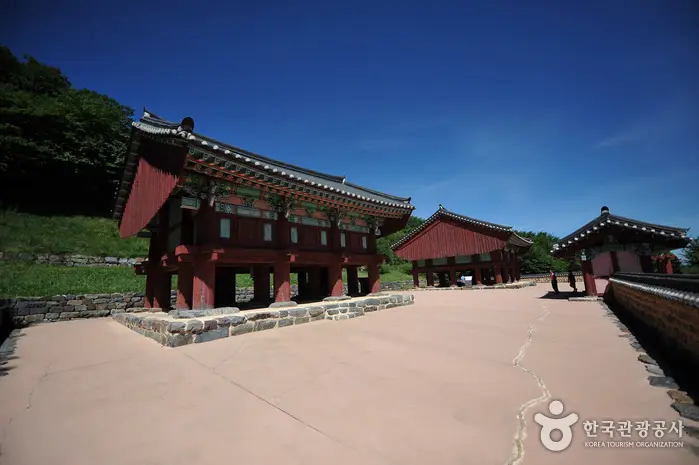
Jeoksangsan Mountain is famous for its crimson autumn foliage, reminiscent of a red skirt. It is home to Joseon-era historic sites such as the Jeoksangsan Archive Site, where the Annals of the Joseon Dynasty were once stored, along with Jeoksangsanseong Fortress and Anguksa Temple, as well as the Meoru Wine Cave, where wild grape wine is aged. Chiryeon Valley, leading to Dongyeopnyeong Pass, is home to Chiryeon Uichong Tomb, a relic of the righteous army resistance during the Japanese colonial period, along with the spectacular Chiryeon Falls, which drops through seven pools.
- Duration
- 6 hours
- Distance
- 49km (incl. 3km Chiryeon Valley trek)
Along the way
- 1
Jeoksangsan Archive Site
적상산사고지
After the royal archive in Chunchugwan in Seoul and other regional archives across the country burned down during the Imjin War in 1592, the 25th year of King Seonjo, new archives were established at Jeongjoksan, Taebaeksan, Myohyangsan, and Odaesan, apart from Chunchugwan. Since the northern region was deemed unsafe at the time, a Sillokjeon (annals hall) was built in 1614, the 6th year of King Gwanghae, on Jeoksangsan Mountain in Muju, renowned as a natural fortress, and the annals were relocated there from Myohyangsan. Later, in 1641, the 19th year of King Injo, Seonwongak Hall was built to house the Seonwollok, the royal family genealogy. It remained one of Korea's five great archives, preserving important state records for over 300 years until the archive was abolished under Japanese rule. It is now designated North Jeolla Province Monument No. 88.MoreLess
- 2
Chiryeon Uichong
칠연의총
Chiryeon Uichong is the burial site of righteous army leader Sin Myeong-seon and his men, who died fighting Japanese forces in the late Joseon period. Sin Myeong-seon, formerly a soldier in the royal guard, entered Muju after Korea's army was disbanded following the Japan-Korea Treaty of 1907, the first year of Emperor Sunjong's Yunghui era, and raised a righteous army based around Deogyusan Mountain, fighting Japanese forces in Muju, Jangsu, Sunchang, Yongdam, and Geochang and achieving many victories. Local residents later buried the remains of Sin Myeong-seon and his men and named the site Chiryeon Uichong. It is a place that holds the spirits of the patriots who gave their lives to defend their declining homeland.MoreLess
- 3
Chiryeon Valley
칠연계곡
The valley formed by bedrock behind Tongan Village in Anseong-myeon, on the Deogyusan side, together with the surrounding area, is called Chiryeonamdong. Though less well known than Muju Gucheondong, it boasts striking scenery of oddly shaped rocks, waterfalls large and small, and pools, offering a charm all its own on a smaller scale. Its best-known spot is Chiryeon Falls, named for its seven consecutive waterfalls and pools. Here, clear water flows down from pool to pool in a series of gentle cascades.MoreLess
- 4
Meoru Wine Cave
머루와인동굴
In the Jeoksangsan area of Bukchang-ri, Jeoksang-myeon, the Meoru Wine Cave lets visitors experience the true taste and charm of Muju's signature specialty, wild grape wine, set amid beautiful natural scenery and cultural heritage. The Meoru Wine Tunnel, used for aging, storing, and selling Muju's wild grape wine, consists of a Wine House and the 'Secret Door of Meoru Wine.' The two-story Wine House (163.73 m2) contains a shop for local specialty products, including firefly-themed goods, along with a wine cafe and traditional tea house, while the 270m-long 'Secret Door of Meoru Wine' offers a wine cafe, wine tasting, and a storage cellar.MoreLess
- 5
Jeoksangsanseong Hoguk Stele
적상산성 호국시비
The Hoguksabi Monument (North Jeolla Province Tangible Cultural Property No. 85), located below the south embankment within the grounds of Anguksa Temple inside Jeoksangsanseong Fortress, is a Joseon-era stele that records in relatively detailed fashion the history of Jeoksangsanseong Fortress. The inscription is now largely worn away and illegible, but its full text is recorded in the 'Gojeokjo' (Record of Historic Sites) published in 1898, the 35th year of King Gojong.MoreLess
- 6
Jeoksangsan Archive Site
적상산사고지
After the royal archive in Chunchugwan in Seoul and other regional archives across the country burned down during the Imjin War in 1592, the 25th year of King Seonjo, new archives were established at Jeongjoksan, Taebaeksan, Myohyangsan, and Odaesan, apart from Chunchugwan. Since the northern region was deemed unsafe at the time, a Sillokjeon (annals hall) was built in 1614, the 6th year of King Gwanghae, on Jeoksangsan Mountain in Muju, renowned as a natural fortress, and the annals were relocated there from Myohyangsan. Later, in 1641, the 19th year of King Injo, Seonwongak Hall was built to house the Seonwollok, the royal family genealogy. It remained one of Korea's five great archives, preserving important state records for over 300 years until the archive was abolished under Japanese rule. It is now designated North Jeolla Province Monument No. 88.MoreLess
- 7
Chiryeon Uichong
칠연의총
Chiryeon Uichong is the burial site of righteous army leader Sin Myeong-seon and his men, who died fighting Japanese forces in the late Joseon period. Sin Myeong-seon, formerly a soldier in the royal guard, entered Muju after Korea's army was disbanded following the Japan-Korea Treaty of 1907, the first year of Emperor Sunjong's Yunghui era, and raised a righteous army based around Deogyusan Mountain, fighting Japanese forces in Muju, Jangsu, Sunchang, Yongdam, and Geochang and achieving many victories. Local residents later buried the remains of Sin Myeong-seon and his men and named the site Chiryeon Uichong. It is a place that holds the spirits of the patriots who gave their lives to defend their declining homeland.MoreLess
- 8
Meoru Wine Cave
머루와인동굴
In the Jeoksangsan area of Bukchang-ri, Jeoksang-myeon, the Meoru Wine Cave lets visitors experience the true taste and charm of Muju's signature specialty, wild grape wine, set amid beautiful natural scenery and cultural heritage. The Meoru Wine Tunnel, used for aging, storing, and selling Muju's wild grape wine, consists of a Wine House and the 'Secret Door of Meoru Wine.' The two-story Wine House (163.73 m2) contains a shop for local specialty products, including firefly-themed goods, along with a wine cafe and traditional tea house, while the 270m-long 'Secret Door of Meoru Wine' offers a wine cafe, wine tasting, and a storage cellar.MoreLess
- 9
Jeoksangsanseong Hoguk Stele
적상산성 호국시비
The Hoguksabi Monument (North Jeolla Province Tangible Cultural Property No. 85), located below the south embankment within the grounds of Anguksa Temple inside Jeoksangsanseong Fortress, is a Joseon-era stele that records in relatively detailed fashion the history of Jeoksangsanseong Fortress. The inscription is now largely worn away and illegible, but its full text is recorded in the 'Gojeokjo' (Record of Historic Sites) published in 1898, the 35th year of King Gojong.MoreLess
- 10
Anguksa Temple
안국사
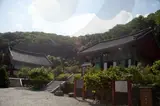
Anguksa Temple, the only surviving old temple within Jeoksangsanseong Fortress, is said to have been built in 1277, the 3rd year of King Chungnyeol of Goryeo, by the monk Woryin. In 1614, the 6th year of King Gwanghae, a Sagak (archive hall) was installed within Jeoksangsanseong Fortress, and in 1641, the 19th year of King Injo, Seonungak Hall was added to house the Annals of the Joseon Dynasty and the Seonwollok royal genealogy at the Jeoksangsan Archive. Hoguksa Temple was built at this time to help guard the archive, and Anguksa, which had stood there since before, came to be used as lodging for the monk-soldiers guarding the archive alongside Hoguksa, taking on the name Anguksa. The temple is especially beautiful during autumn foliage season, and a two-lane paved road allows visitors to drive all the way to the mountain summit. Muju Resort and the Rajetongmun Gucheondong Valley are nearby.MoreLess
Source: Korea Tourism Organization (TourAPI) · Machine-translated