Become Lee Mong-ryong and Seong Chun-hyang: A Walk Through Downtown Namwon
14 stops · 6 hours
Namwon is a town filled with the tender love story of Seong Chun-hyang and Lee Mong-ryong. Traces of their tale remain throughout the city — not only at Gwanghallu Garden and Chunhyang Theme Park in downtown Namwon, but also at Yukmojeong Pavilion, Chunhyang's Tomb, and Orijeong Pavilion. Namwon was also the site of the Battle of Namwon Fortress during the Japanese invasions of Korea, and a single day isn't enough to take in all its historical sites — the old traces of Namwon Fortress, Maninuichong Tomb, Gyoryongsanseong Fortress, and Manboksa Temple Site, the setting of Kim Si-seup's tale 'Manboksa jeopogi.'
- Duration
- 6 hours
- Distance
- 9.8km
Along the way
- 1
Maninuichong
만인의총
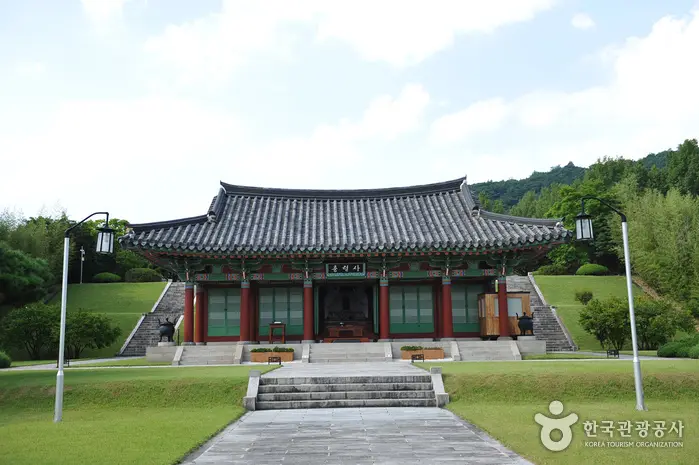
Maninuichong is a memorial mound holding the patriotic spirits of some 10,000 civilians, officials, and soldiers who died fighting in the Battle of Namwon Fortress during the Jeongyu War (1597). To defend Namwon Fortress, the court sent about 1,000 troops led by Jeolla Provincial Army Commander Yi Bok-nam, along with 3,000 Ming troops under Vice Commander Yang Yuan. Despite fighting fiercely at the cost of their lives, they were overwhelmed by superior numbers, and some 10,000 patriots — including about 6,000 civilians — fought to the end and died heroically. Every year on September 26, a memorial rite is held at Maninuichong to honor their noble sacrifice.MoreLess
- 2
Namwon Tourist Complex
남원관광단지
Namwon Tourist Complex includes the National Gugak Center for Namwon, the Chunhyang Culture & Arts Center, Chunhyang Theme Park, and a folk museum, along with amusement facilities, Namwon Land, lodging, specialty restaurants, and an observation deck. Nearby, walking trails connect Geungnakam and Deogeumam hermitages, Binggochi, and natural caves, and a water dam built on the Yocheonsu stream in front of the wide plaza has created a water leisure park, together offering an excellent place for tourism and relaxation.MoreLess
- 3
Seonwonsa Temple
선원사
Seonwonsa Temple, located at 392-1 Dotong-dong, Namwon, North Jeolla Province, on Manhaengsan Mountain, is a branch temple of Geumsansa Temple, the head temple of the 17th district of the Jogye Order of Korean Buddhism. It was founded in 875, the first year of King Heongang of Silla, by National Preceptor Doseon. Master Doseon judged that for Namwon to prosper, the powerful 'guest mountain' Gyoryongsan needed to be held in check while the weaker 'host mountain' Baekgongsan was strengthened, and since Baekgongsan's source lay in the Manhaengsan range beneath Cheonwangbong Peak, he built Seonwonsa at the tip of Baekgongsan's ridge to draw on Manhaengsan's power to counter Gyoryongsan.MoreLess
- 4
Lunch (Namwon Tofu Village, Namwon Herb Village)
점심식사(남원두부마을, 남원허브마을)
[Namwon Tofu Village] Namwon Tofu Village is built entirely of wood, with a pleasant garden for resting. It serves handmade tofu, nutritious hot-stone rice, scorched-rice tea, and tofu hot pot; tofu is rich in plant protein and highly nutritious. It is located near the tourist complex in central Namwon. [Namwon Herb Village] On the western slopes of Baraebong Peak in Jirisan National Park, where royal azaleas bloom in spring, Chunhyang Herb Village turns crimson with azaleas each spring while its fields fill with fragrant herbs. As acorns grow abundantly here, visitors can enjoy various unusual and delicious acorn dishes such as acorn jelly, acorn rice cake, and acorn jelly soup.MoreLess
- 5Gwanghallu Garden
광한루원
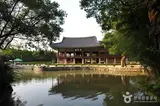
Originally built in 1419 by Minister Hwang Hui during the reign of King Sejong of Joseon and named Gwangtongnu, it was renamed Gwanghallu in 1444 by Provincial Governor Jeong In-ji, who was so struck by its beauty that he likened it to Gwanghancheongheobu, the palace of the moon goddess. It is also famous as the place where Lee Do-ryeong and Chun-hyang's love story begins in the novel 'Chunhyangjeon.' In the 1920s, Chunhyangsa Shrine was built on the grounds to enshrine a portrait of Chun-hyang, honoring the Korean national spirit for future generations.MoreLess
- 6
Lunch (Namwon Tofu Village, Namwon Herb Village)
점심식사(남원두부마을, 남원허브마을)
[Namwon Tofu Village] Namwon Tofu Village is built entirely of wood, with a pleasant garden for resting. It serves handmade tofu, nutritious hot-stone rice, scorched-rice tea, and tofu hot pot; tofu is rich in plant protein and highly nutritious. It is located near the tourist complex in central Namwon. [Namwon Herb Village] On the western slopes of Baraebong Peak in Jirisan National Park, where royal azaleas bloom in spring, Chunhyang Herb Village turns crimson with azaleas each spring while its fields fill with fragrant herbs. As acorns grow abundantly here, visitors can enjoy various unusual and delicious acorn dishes such as acorn jelly, acorn rice cake, and acorn jelly soup.MoreLess
- 7Gwanghallu Garden
광한루원
Originally built in 1419 by Minister Hwang Hui during the reign of King Sejong of Joseon and named Gwangtongnu, it was renamed Gwanghallu in 1444 by Provincial Governor Jeong In-ji, who was so struck by its beauty that he likened it to Gwanghancheongheobu, the palace of the moon goddess. It is also famous as the place where Lee Do-ryeong and Chun-hyang's love story begins in the novel 'Chunhyangjeon.' In the 1920s, Chunhyangsa Shrine was built on the grounds to enshrine a portrait of Chun-hyang, honoring the Korean national spirit for future generations.MoreLess
- 8
Manboksa Temple Site
만복사지
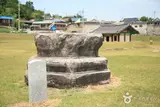
Manboksaji, the site of Manboksa Temple, was built at the foot of Girinsan Mountain. One theory holds it was built by National Preceptor Doseon at the end of Silla, but records indicate it was actually built during the reign of King Munjong of Goryeo. The temple once had a main hall, a hall of a thousand Buddhas, a hall of images, a bell pavilion, a hall of the underworld king, a hall of arhats, and a medicine Buddha hall, along with a five-story stone pagoda, a standing stone Buddha, flagpole supports, and stone figures, suggesting it was once a very large temple. Place names near the site such as Baekteul, Sseogeun Bapbaemi, and Jungsanggol still hint at the scale of the temple in its day. Baekteul refers to the embankment in front of the temple site, so named because monks would hang their laundry there, turning the area entirely white; Sseogeun Bapbaemi was where food scraps from the temple were disposed of, suggesting there were once many monks living here.MoreLess
- 9
Manboksa Temple Site
만복사지
Manboksaji, the site of Manboksa Temple, was built at the foot of Girinsan Mountain. One theory holds it was built by National Preceptor Doseon at the end of Silla, but records indicate it was actually built during the reign of King Munjong of Goryeo. The temple once had a main hall, a hall of a thousand Buddhas, a hall of images, a bell pavilion, a hall of the underworld king, a hall of arhats, and a medicine Buddha hall, along with a five-story stone pagoda, a standing stone Buddha, flagpole supports, and stone figures, suggesting it was once a very large temple. Place names near the site such as Baekteul, Sseogeun Bapbaemi, and Jungsanggol still hint at the scale of the temple in its day. Baekteul refers to the embankment in front of the temple site, so named because monks would hang their laundry there, turning the area entirely white; Sseogeun Bapbaemi was where food scraps from the temple were disposed of, suggesting there were once many monks living here.MoreLess
- 10
Gyoryongsanseong Fortress
교룡산성
Gyoryongsanseong is a fortress built along a mountain ridge, believed to have first been constructed during the Baekje period. It stands on Mt. Gyoryongsan (518m) in Sangok-dong, Namwon. The fortress is thought to have been built by Baekje to defend against Silla invasions. Built of stone, the fortress has a total circumference of 3,120m. Battles were fought here against Japanese forces at the end of Goryeo and during the Japanese invasions of Korea. Inside stands Seongguksa Temple, founded in 685, the 5th year of King Sinmun of Silla. Gyoryongsanseong is designated North Jeolla Province Monument No. 9.MoreLess
- 11
Maninuichong
만인의총
Maninuichong is a memorial mound holding the patriotic spirits of some 10,000 civilians, officials, and soldiers who died fighting in the Battle of Namwon Fortress during the Jeongyu War (1597). To defend Namwon Fortress, the court sent about 1,000 troops led by Jeolla Provincial Army Commander Yi Bok-nam, along with 3,000 Ming troops under Vice Commander Yang Yuan. Despite fighting fiercely at the cost of their lives, they were overwhelmed by superior numbers, and some 10,000 patriots — including about 6,000 civilians — fought to the end and died heroically. Every year on September 26, a memorial rite is held at Maninuichong to honor their noble sacrifice.MoreLess
- 12
Seonwonsa Temple
선원사
Seonwonsa Temple, located at 392-1 Dotong-dong, Namwon, North Jeolla Province, on Manhaengsan Mountain, is a branch temple of Geumsansa Temple, the head temple of the 17th district of the Jogye Order of Korean Buddhism. It was founded in 875, the first year of King Heongang of Silla, by National Preceptor Doseon. Master Doseon judged that for Namwon to prosper, the powerful 'guest mountain' Gyoryongsan needed to be held in check while the weaker 'host mountain' Baekgongsan was strengthened, and since Baekgongsan's source lay in the Manhaengsan range beneath Cheonwangbong Peak, he built Seonwonsa at the tip of Baekgongsan's ridge to draw on Manhaengsan's power to counter Gyoryongsan.MoreLess
- 13
Namwon Tourist Complex
남원관광단지
Namwon Tourist Complex includes the National Gugak Center for Namwon, the Chunhyang Culture & Arts Center, Chunhyang Theme Park, and a folk museum, along with amusement facilities, Namwon Land, lodging, specialty restaurants, and an observation deck. Nearby, walking trails connect Geungnakam and Deogeumam hermitages, Binggochi, and natural caves, and a water dam built on the Yocheonsu stream in front of the wide plaza has created a water leisure park, together offering an excellent place for tourism and relaxation.MoreLess
- 14
Gyoryongsanseong Fortress
교룡산성
Gyoryongsanseong is a fortress built along a mountain ridge, believed to have first been constructed during the Baekje period. It stands on Mt. Gyoryongsan (518m) in Sangok-dong, Namwon. The fortress is thought to have been built by Baekje to defend against Silla invasions. Built of stone, the fortress has a total circumference of 3,120m. Battles were fought here against Japanese forces at the end of Goryeo and during the Japanese invasions of Korea. Inside stands Seongguksa Temple, founded in 685, the 5th year of King Sinmun of Silla. Gyoryongsanseong is designated North Jeolla Province Monument No. 9.MoreLess
Source: Korea Tourism Organization (TourAPI) · Machine-translated