A Journey Through Gunsan's Modern Heritage, Tracing the Marks of Rice Exploitation
15 stops · 6 hours
Gunsan, a port opened in 1899, was a symbolic city of rice exploitation during the Japanese colonial period. Here you can encounter not only symbolic cultural heritage of that exploitation such as Haemang Tunnel, the Gunsan Customs House, the Shimatani Vault, and Impi Station, but also the Hirotsu House and Lee Yeong-chun House built during the colonial period, as well as Dongguksa, the only Japanese-style Buddhist temple in Korea. In the grounds of Balsan Elementary School, where the Shimatani Vault stands, cultural artifacts collected by Shimatani remain as well, making the visit all the more poignant.
- Duration
- 6 hours
- Distance
- 24.7km
Along the way
- 1
Impi Station
임피역사
Impi Station, located in Sulsan-ri, Impi-myeon, Gunsan, was built around 1936 as a railway station on the Gunsan Line. Impi Station, situated on the Gunsan Line completed in 1912 as a branch of the Honam Line, was originally meant to be built in downtown Impi, but according to local legend, Confucian scholars there opposed the plan for feng shui reasons, so the line was routed through Sulsan-ri instead. During the Japanese colonial period, the Gunsan Line served as a crucial transport route for shipping agricultural produce from the Jeolla provinces to Japan through Gunsan Port, carrying the painful history of exploitation.MoreLess
- 2
Honam Customs Exhibition Hall (former Gunsan Customs House main building)
호남관세전시관(구, 군산세관본관)
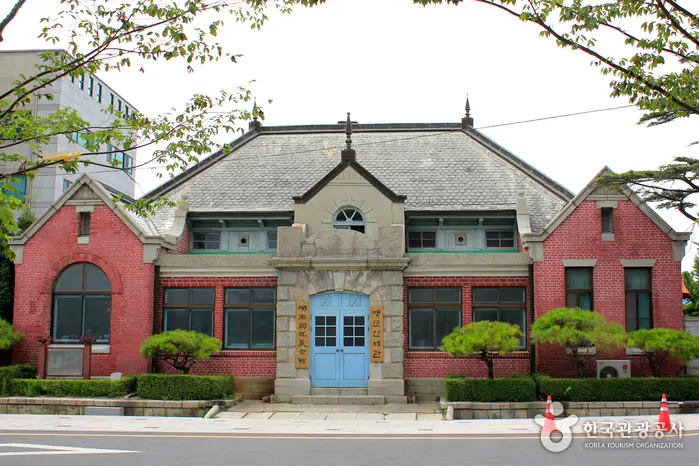
Honam Customs Exhibition Hall (formerly the Gunsan Customs House main building) was built in 1908, the 2nd year of Emperor Sunjong of the Korean Empire. According to accounts from the time, it is said to have been designed by a Frenchman or a German, with red bricks and building materials imported from Belgium. The Gunsan Customs House once had many annex buildings, but today only the main building remains, all others having been demolished. It is one of the three great examples of Western classical architecture surviving in Korea, and today it operates as the Honam Customs Exhibition Hall.MoreLess
- 3
Former Japanese Farm Storehouse in Gaejeong-myeon, Gunsan (Shimatani Vault)
군산 개정면 구 일본인농장 창고 (시마타니금고)
Designated National Registered Cultural Heritage No. 182 in 2005, the Shimatani Vault is a building constructed in the 1920s by Shimatani Yasoya, a leading landowner in the Gunsan area during the Japanese colonial period, to serve as his vault. Shimatani took an interest in collecting Korean cultural artifacts and illegally amassed numerous works of art, including the stone lantern and five-story stone pagoda of Balsan-ri. This building was where Shimatani stored the antiques he had collected.MoreLess
- 4
Wolmyeong Park, Chae Man-sik Literary Monument (Haemang Tunnel)
월명공원 채만식문학비(해망굴)
Wolmyeong Park, a symbol of Gunsan much like Namsan Park is to Seoul, offers panoramic views of the city in every direction. The walk through Wolmyeong Park begins by parking near the entrance to Heungcheonsa Temple beside Haemang Tunnel and climbing 114 steps. From the Susi Pagoda or the observation deck, you can enjoy sweeping views of small fishing boats and large ships passing through the waters off Gunsan, as well as the Janghang area across the Geumgang River, and at the Sea Sculpture Park you can admire a variety of works. A little further along the path from the sculpture park, you'll come to the Chae Man-sik Literary Monument.MoreLess
- 5
Gunsan Sinheung-dong Japanese-style House (Hirotsu House)
군산 신흥동 일본식가옥(히로쓰 가옥)
Designated National Registered Cultural Heritage in 2005, the Hirotsu House sits in the Sinheung-dong area, once home to wealthy figures of Gunsan during the Japanese colonial period. It was built by Hirotsu Keisaburo, who ran a textile shop, and later passed to Lee Yong-gu, president of the former Honam Flour Mills, remaining the property of Korea Flour Mills to this day. Many Korean films and dramas, including 'The General's Son,' 'Fighter in the Wind,' and 'Tazza,' have been filmed at this house. The building follows the style of a high-class residence of a modern Japanese warrior household. A two-story wooden house, it retains its original appearance in the roof, exterior finish, interior, and Japanese-style garden from the time of its construction, giving it great architectural and historical significance.MoreLess
- 6
Lee Yeong-chun House
이영춘가옥
Built by Kumamoto Rihei, a wealthy Japanese landowner who ran a large farm in Gunsan during the Japanese colonial period, this villa-style house served as his temporary residence during visits to the farm each spring and harvest season. Blending Western, Korean, and Japanese architectural styles, the building came to be called Lee Yeong-chun House after Dr. Lee Yeong-chun (pen name Ssangcheon), a pioneer of rural public health in Korea, lived there after liberation. Its striking exterior has made it a filming location for many movies and dramas, including 'Frozen Point,' 'Sandglass,' and 'Yain Sidae.'MoreLess
- 7
Dongguksa Temple
동국사
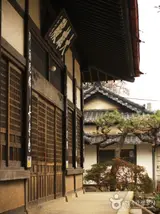
Dongguksa Temple was founded in 1909 by the Japanese monk Seoneung Bulgwan, and was operated by Japanese monks for the 36 years of Japanese colonial rule until Korea's liberation on August 15, 1945, when it returned to Korean hands — a poignant history the temple still carries. It has continued through the Korean Empire and the colonial period down to today. As the only surviving Japanese-style Buddhist temple in Korea, it is notable for its main hall and monks' quarters connected by an indoor corridor. Unlike the colorfully painted eaves typical of Korean temples, Dongguksa's plain, unadorned eaves and the many windows on the exterior walls of the main hall reflect its Japanese character.MoreLess
- 8
Lunch (Gunsan Hoetjip, Gungjeon Kkotgejang)
점심식사(군산횟집, 궁전꽃게장)
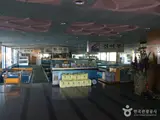
[Gunsan Hoetjip] Gunsan Hoetjip specializes in raw fish set meals. What stands out is that the entire first floor is used as a live fish tank. [Gungjeon Kkotgejang] Gungjeon Kkotgejang specializes in blue crab dishes. Carrying on traditional flavors suited to modern tastes, the crabs are packed generously with seasoned, appetizing crab meat that is tender and sweet, offering a variety of blue crab dishes enjoyed by people of all ages.MoreLess
- 9
Wolmyeong Park, Chae Man-sik Literary Monument (Haemang Tunnel)
월명공원 채만식문학비(해망굴)
Wolmyeong Park, a symbol of Gunsan much like Namsan Park is to Seoul, offers panoramic views of the city in every direction. The walk through Wolmyeong Park begins by parking near the entrance to Heungcheonsa Temple beside Haemang Tunnel and climbing 114 steps. From the Susi Pagoda or the observation deck, you can enjoy sweeping views of small fishing boats and large ships passing through the waters off Gunsan, as well as the Janghang area across the Geumgang River, and at the Sea Sculpture Park you can admire a variety of works. A little further along the path from the sculpture park, you'll come to the Chae Man-sik Literary Monument.MoreLess
- 10
Lunch (Gunsan Hoetjip, Gungjeon Kkotgejang)
점심식사(군산횟집, 궁전꽃게장)
[Gunsan Hoetjip] Gunsan Hoetjip specializes in raw fish set meals. What stands out is that the entire first floor is used as a live fish tank. [Gungjeon Kkotgejang] Gungjeon Kkotgejang specializes in blue crab dishes. Carrying on traditional flavors suited to modern tastes, the crabs are packed generously with seasoned, appetizing crab meat that is tender and sweet, offering a variety of blue crab dishes enjoyed by people of all ages.MoreLess
- 11
Lee Yeong-chun House
이영춘가옥
Built by Kumamoto Rihei, a wealthy Japanese landowner who ran a large farm in Gunsan during the Japanese colonial period, this villa-style house served as his temporary residence during visits to the farm each spring and harvest season. Blending Western, Korean, and Japanese architectural styles, the building came to be called Lee Yeong-chun House after Dr. Lee Yeong-chun (pen name Ssangcheon), a pioneer of rural public health in Korea, lived there after liberation. Its striking exterior has made it a filming location for many movies and dramas, including 'Frozen Point,' 'Sandglass,' and 'Yain Sidae.'MoreLess
- 12
Gunsan Sinheung-dong Japanese-style House (Hirotsu House)
군산 신흥동 일본식가옥(히로쓰 가옥)
Designated National Registered Cultural Heritage in 2005, the Hirotsu House sits in the Sinheung-dong area, once home to wealthy figures of Gunsan during the Japanese colonial period. It was built by Hirotsu Keisaburo, who ran a textile shop, and later passed to Lee Yong-gu, president of the former Honam Flour Mills, remaining the property of Korea Flour Mills to this day. Many Korean films and dramas, including 'The General's Son,' 'Fighter in the Wind,' and 'Tazza,' have been filmed at this house. The building follows the style of a high-class residence of a modern Japanese warrior household. A two-story wooden house, it retains its original appearance in the roof, exterior finish, interior, and Japanese-style garden from the time of its construction, giving it great architectural and historical significance.MoreLess
- 13
Former Japanese Farm Storehouse in Gaejeong-myeon, Gunsan (Shimatani Vault)
군산 개정면 구 일본인농장 창고 (시마타니금고)
Designated National Registered Cultural Heritage No. 182 in 2005, the Shimatani Vault is a building constructed in the 1920s by Shimatani Yasoya, a leading landowner in the Gunsan area during the Japanese colonial period, to serve as his vault. Shimatani took an interest in collecting Korean cultural artifacts and illegally amassed numerous works of art, including the stone lantern and five-story stone pagoda of Balsan-ri. This building was where Shimatani stored the antiques he had collected.MoreLess
- 14
Impi Station
임피역사
Impi Station, located in Sulsan-ri, Impi-myeon, Gunsan, was built around 1936 as a railway station on the Gunsan Line. Impi Station, situated on the Gunsan Line completed in 1912 as a branch of the Honam Line, was originally meant to be built in downtown Impi, but according to local legend, Confucian scholars there opposed the plan for feng shui reasons, so the line was routed through Sulsan-ri instead. During the Japanese colonial period, the Gunsan Line served as a crucial transport route for shipping agricultural produce from the Jeolla provinces to Japan through Gunsan Port, carrying the painful history of exploitation.MoreLess
- 15
Honam Customs Exhibition Hall (former Gunsan Customs House main building)
호남관세전시관(구, 군산세관본관)
Honam Customs Exhibition Hall (formerly the Gunsan Customs House main building) was built in 1908, the 2nd year of Emperor Sunjong of the Korean Empire. According to accounts from the time, it is said to have been designed by a Frenchman or a German, with red bricks and building materials imported from Belgium. The Gunsan Customs House once had many annex buildings, but today only the main building remains, all others having been demolished. It is one of the three great examples of Western classical architecture surviving in Korea, and today it operates as the Honam Customs Exhibition Hall.MoreLess
Source: Korea Tourism Organization (TourAPI) · Machine-translated