Sorokdo, the Island That Holds the Sorrow of Hansen's Disease Patients
4 stops · 4 hours
Sorokdo, named for its shape resembling a young deer, is an island holding a sad history of suffering marked by forced labor and violence. During the Japanese colonial period, Hansen's disease (leprosy) patients were forcibly confined here, and the island still preserves not only the old detention cells and autopsy room from that time but also Mallyeongdang Shrine, a grain storehouse, a Shinto shrine, a lighthouse, the former Noksan Elementary School building, and the director's residence. Except for the main building of Jahye Hospital, all of the old structures remaining on Sorokdo are registered as cultural heritage, making the entire visit a quietly sobering experience.
- Duration
- 4 hours
- Distance
- approx. 27km
Along the way
- 1
Goheung Balpo Manhoseong Fortress
고흥발포만호성
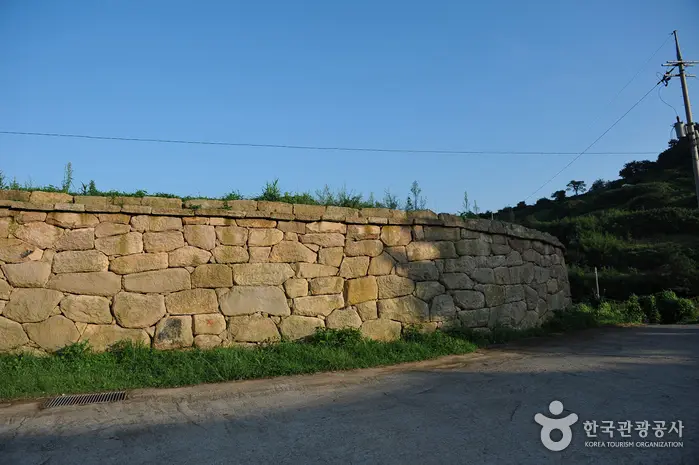
Balpojinseong Fortress is centered around Seongchon Village in Dohwa-myeon, Goheung County. As a naval garrison fortress governed by a manho (naval commander) under one of the five garrisons and five ports (five garrisons: Suncheon, Nagan, Boseong, Gwangyang, Goheung / five ports: Sado, Yeodo, Nokdo, Balpo, Bangdap) of the Jeolla Left Naval Command, it was built in 1490, the 21st year of King Seongjong, and abolished in 1894, the 31st year of King Gojong — an early Joseon-era fortress. The fortress is also linked to Admiral Yi Sun-sin, who served as Balpo manho at age 36 in 1580, the 13th year of King Seonjo, for 18 months.MoreLess
- 2
Geumtapsa Temple (Torreya Forest)
금탑사(비자나무숲)
Geumtapsa Temple sits partway up Cheondeungsan Mountain (554m) in Podu-myeon, 16km from downtown Goheung. It is said to have been founded by Master Wonhyo, though there is no firm evidence for this. The name 'Geumtapsa' (Golden Pagoda Temple) is said to refer to the jeweled pagoda built by King Ashoka of India. The temple burned down during the Jeongyu War and was rebuilt in 1603 by Masters Gunghyeon and Oksun, only to burn again in 1692, the 18th year of King Sukjong, leaving only Geungnakjeon Hall standing. Surviving buildings today include Geungnakjeon Hall (Local Cultural Property No. 102), along with Myeongbujeon Hall, Samseonggak Shrine, Beomjonggak Bell Pavilion, and monks' quarters, as well as a hanging Buddhist painting (gwaebultaeng) designated Treasure No. 1344. The lush torreya forest surrounding the temple is Natural Monument No. 239 — some 3,300 torreya trees grow densely around Geumtapsa and its hermitages across an area of about 40,000 pyeong (roughly 132,000 m2), creating a spectacular sight.MoreLess
- 3
Sorokdo
소록도
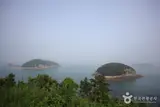
Sorokdo lies less than 1km from Nokdong Port at the tip of the Goheung Peninsula in South Jeolla Province, and is named for its resemblance to a young deer. The island is known for the National Sorokdo Hospital, established for Hansen's disease patients. Though the island carries the sorrowful history of past Hansen's disease patients, today about 700 patients live here, having overcome hardship to cultivate love and hope. Covering just 4.42km2, the island has emerged as a new tourist attraction in Goheung County thanks to its clean natural environment, scenic coastline, and historic monuments. Standing at the pier of Nokdong Port across the Goheung Peninsula, the small, deer-like island of Sorokdo comes into view just 600m ahead.MoreLess
- 4
Geogeumdo
거금도
Geogeumdo Island lies at sea 2.3km south of Doyang-eup on the Goheung Peninsula, just below Sorokdo. Its highest point is Jeokdaebong Peak (592m), and while much of the terrain rises to around 400m, the west and north are gentler, hilly uplands. The coastline is largely sandy, though the protruding capes form rocky shores with well-developed sea cliffs. Most residents combine farming with fishing. Major crops include rice, barley, sesame, sweet potatoes, garlic, and onions. Eel, gray mullet, and gizzard shad are caught in the surrounding waters, and laver, sea mustard, and oyster farming is also active, with laver farming carried out on a particularly large scale. Notable cultural heritage includes a shell midden in Daeheung-ri, along with Songgwangam Hermitage, the old fortress at Geumsan-myeon, and the Sanghachon dolmens.MoreLess
Source: Korea Tourism Organization (TourAPI) · Machine-translated