Tracing the Footsteps of Hendrick Hamel
7 stops · 6 hours
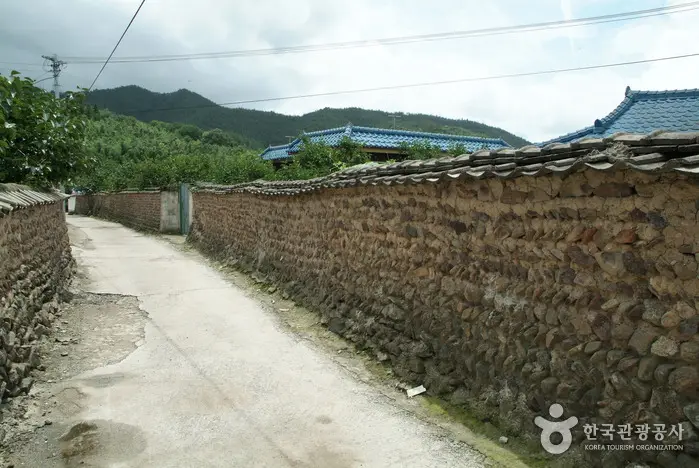
Jeolla Byeongyeongseong Fortress in Gangjin was where the provincial army commander's headquarters was located during the Joseon dynasty. Throughout the fortress area, there is much to see, including the old stone walls of Byeongyeong Village in Gangjin, the ginkgo tree of Seongdong-ri designated a natural monument, the torreya tree of Samin-ri, and Byeongyeongseong Hongyo Bridge. Notably, this is where Hendrick Hamel, author of the 'Hamel's Journal,' once stayed, and the old stone walls of Byeongyeong are well known for a construction method called 'Hamel-style wall building.' With Byeongyeongseong Fortress, Byeongyeong Village, and traces of Hamel all preserved here, it is a perfect place for a leisurely walking tour.
- Duration
- 6 hours
- Distance
- 19km
Along the way
- 1
Old Stone Walls of Gangjin Byeongyeong Village
강진 병영마을 옛담장
Gangjin Byeongyeong Village takes its name from 'byeongyeong,' referring to the headquarters (yeong) of the provincial army commander (byeongmajeoldosa), and has maintained its identity through a long history. Surrounded by mountains large and small — Suinsan, Seongjasan, Ongnyeobong, Byeollaksan, and Hwabangsan — it forms a natural fortress in a basin shape; Byeongyeongseong, which once oversaw the military affairs of all Jeolla-do, was established here early on, and the area developed rapidly through commerce. Here remains 'Byeongyeongseongji,' Historic Site No. 397, bearing witness to that history.\nMoreLess
- 2Gangjin Jeolla Byeongyeongseong Fortress
강진전라병영성
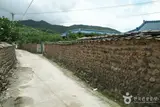
This fortress served for 600 years of the Joseon dynasty as the headquarters of the army overseeing 53 districts and 6 garrisons across Honam and Jeju-do. It was built in 1417 (the 17th year of King Taejong) by relocating the provincial army command originally established in Gwangsan-hyeon. It is also called 'Seolseong' (Snow Fortress) because the first commander, General Ma Cheon-mok, is said to have followed footprints in the snow revealed to him in a dream to determine the fortress's layout. Built on flat land, according to records such as the 'Daedongjiji' and 'Saekji,' it had a circumference of 2,820 cheok, a height of 18 cheok, 12 barbican gates, 5 ponds, 9 wells, 2 watchtowers, 4 gates, and 15 auxiliary buildings including a banquet hall and a guest house. It was temporarily relocated to Jangheung in 1599 (the 32nd year of King Seonjo) and moved back here in 1604; it is also where Hendrick Hamel, the Dutchman shipwrecked on Jeju-do, was brought and held captive for about 8 years.\nMoreLess
- 3
Hamel's Place of Detention and the Seongdong-ri Ginkgo Tree, Gangjin
하멜체류지와 강진 성동리 은행나무
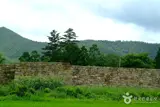
The ginkgo tree of Byeongyeong-myeon is located 14.8km northeast of Gangjin-eup, at the seat of Byeongyeong-myeon. This area was the seat of Dogang-hyeon county during the Goryeo dynasty, and in 1417 (the 17th year of King Taejong of Joseon), a byeongyeong (military headquarters) was established here with a provincial army commander stationed. The ginkgo tree stands about 500m from this site. Rising prominently at the center of Dongseong Village, it serves as the village's symbolic tree, standing 30m tall with a trunk circumference of 6.75m at breast height, and its canopy spreads 16.5m to the east, 13m to the west, 10.9m to the south, and 3.5m to the north from its center.\nMoreLess
- 4
Byeongyeongseong Hongyo Bridge
병영성 홍교
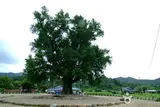
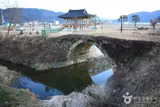
Byeongyeong was a key military site that protected Honam for over 500 years after a provincial army command was established in 1417 (the 17th year of King Taejong of Joseon) to defend against foreign invasions from the southern coast, and Hongyo Bridge served as the gateway to Byeongyeong. Also known as Baejin-gang Bridge, Hongyo Bridge was built by precisely stacking 74 rectangular granite blocks in 26 rows into a rainbow-like arch, reinforced with packed rubble, then finished with clay laid across the top of the bridge.\nAt the top center of the arch, a protruding dragon head holds a wish-fulfilling jewel in its mouth, its head raised as if summoning the powers of wind and cloud. Its expression is quite whimsical, and its design also seems to hint, in a compressed way, at the popular reverence for the 'Manin-wolgyo' bridge. Based on records indicating it was built to commemorate the triumphant homecoming of Ryu Han-gye, who became Sungnokdaebu in 1739 after being appointed Gaseondongchu in 1698 (the year Musul, during King Sukjong's reign), supervised and completed by Yang Han-jo, it is presumed to have been built in the 18th century and is considered a masterwork of construction.\nMoreLess
- 5
Wolnamsaji Temple Site
월남사지
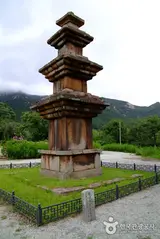
Wolnamsaji is a rectangular temple site located on flat ground, backed by the summit of Wolchulsan Mountain and Yangjaam Hermitage, measuring 175m across the front and 185m along the sides, with a total area of about 10,000 pyeong; in scale and terrain, it is presumed to have once been larger than nearby Muwisa Temple. Today, two relics remain that draw attention as they are believed to be Baekje-style: a three-story stone pagoda (Treasure No. 298) and the stele of National Preceptor Jingak (Treasure No. 313), with traces of an outer perimeter wall remaining around the pagoda. Relics believed to be sarira base stones or pagoda foundation stones also remain among nearby private houses. At Wolnamsaji, artifacts including roof tiles, celadon, and white porcelain fragments have been discovered, most dating from the Goryeo through Joseon periods; of particular interest is the discovery of celadon tile fragments believed to have been used on the walls of Wolnamsa's buildings.\nMoreLess
- 6Jeonnam Gangjin Tea Garden
전남 강진다원
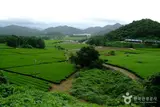
Wolchulsan, called the 'Geumgangsan of the South,' is a mountain surrounded by great rocks like a folding screen, its scenery as striking as a landscape painting; since ancient times, tea trees have been cultivated here, centered on the various temples around the mountain.\nMoreLess
- 7Muwisa Temple
무위사
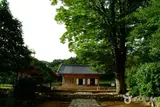
Muwisa is located about 16km northwest of Gangjin-eup. According to the temple's records, it was founded in 617 (the 39th year of King Jinpyeong of Silla) by Master Wonhyo on the southern slope of Wolchulsan Mountain and was originally named Gwaneumsa; in 1555, Master Taegam renamed it to its present name, Muwisa. With the exception of Geungnakbojeon Hall, most of the buildings constructed at that time were destroyed by fire during the Imjin War. Geungnakbojeon, built in the early Joseon period, is designated National Treasure No. 13. After liberation, in 1956 Geungnakjeon was repaired and a preservation hall was newly built to house its murals. Later, in 1975, Bonghyanggak, Haetalmun Gate, Myeongbujeon, and Cheonbuljeon were rebuilt. The Pyeongwang Stupa of National Preceptor Seongak, built in the Goryeo period (Treasure No. 507), and a three-story stone pagoda (Provincial Cultural Property Material No. 76) remain on the grounds.\nMoreLess
Source: Korea Tourism Organization (TourAPI) · Machine-translated