Walking the Stone Walls of Hanbam Village, a Jeju-do on the Mainland
4 stops · 5 hours
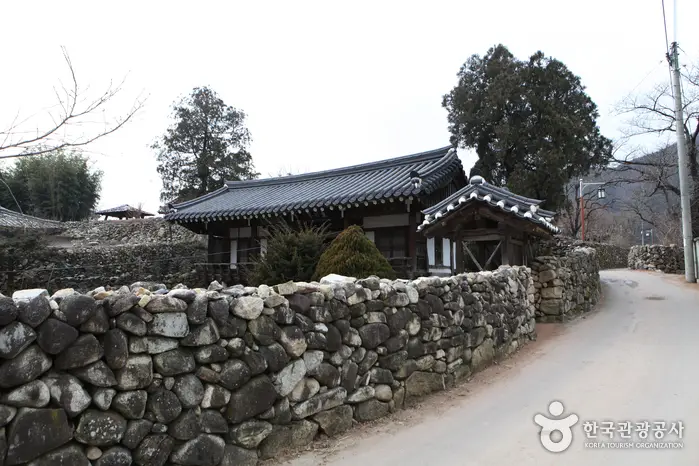
Known as 'a Jeju-do on the mainland,' Hanbam Village is a clan village of the Burim Hong family, where low stone walls stretch on and on, giving a fine feeling of walking along narrow alleyways. Besides its stone walls, Hanbam Village preserves traditional old houses such as Gunwi Sangmae-daek and Daeyul-ri Daecheong, as well as cultural properties including the standing stone Buddha of Daeyul-ri. Nearby, inside a cave in a natural cliff, is the Gunwi Triad Rock-carved Buddha, which predates Seokguram Grotto, and is well worth visiting together.
- Duration
- 5 hours
- Distance
- 29km
Along the way
- 1
Gunwi Bugye Hanbam Village Stone Walls
군위 부계 한밤마을 돌담길
Hanbam Village, in Bugye-myeon, Gunwi-gun, flourished when a scholar named Hong Gwan moved to the village around 950 CE during the Silla period, and the Bugye Hong clan prospered there. It was called Ilya or Daeya through the Goryeo period, but was renamed Daeyul by a scholar named Hong Ro, who passed the civil service examination in 1390. With Palgongsan Mountain located to the north, the scenery is stunningly beautiful in every direction, and the village is notable for the fact that all of its houses face north.\nMoreLess
- 2
Juhongsanjang
주홍산장
There are many fine restaurants around Palgongsan in Gyeongbuk, and among them, this restaurant is famous for its 15-year tradition of specializing in duck dishes. Located just past Hantijae Pass on Palgongsan, an area known for its good water, clean air, and fine scenery, the restaurant catches the eye upon arrival with its water mill and log cabins, giving off the exact feel of a 'picturesque house in the forest.' Enjoying duck meat in a cabin amid pretty landscaping is quite an experience. It is a place worth visiting not merely as a restaurant but as a recommended tourist attraction in its own right.\nMoreLess

- 3Gunwi Rock-carved Amitabha Triad
군위 아미타여래삼존 석굴
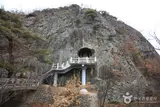
Following the Palgongsan circular road from Daegu Metropolitan City up to the top of Hantijae Pass, the first place you reach is Namsan-ri, Bugye-myeon, Gunwi-gun. Here stands the Triad Rock-carved Buddha (also known as the 'Second Seokguram'), founded by Master Geukdal in the 15th year of King Sojin of Silla. Designated National Treasure No. 109, the Triad Rock-carved Buddha reveals the serene forms of Amitabha Buddha, Mahasthamaprapta Bodhisattva, and Avalokitesvara Bodhisattva carved into a natural cave in a sheer cliff. Located 20m above ground, with an entrance 4.25m wide and 4.3m deep, the cave went unnoticed by the public until the late 1960s, when scholars in the early 1970s determined it had been built more than a century before Gyeongju's Seokguram Grotto and was in fact its predecessor, earning it recognition as a world-class cultural treasure.\nMoreLess
- 4
Ingaksa Temple
인각사
Heading from Gunwi-eup toward Yeongcheon, you follow the refreshing flow of the Wicheon River, and after about 30 minutes' drive you arrive at Hwabuk-ri, Goro-myeon. Here stands Ingaksa, a thousand-year-old temple where the eminent Goryeo monk Iryeon stayed while writing the Samguk Yusa.\nIngaksa was founded by Master Uisang in the 11th year of Queen Seondeok of Silla. Notably, it is said that the Gusanmun assembly of Seon sects was held here twice, showing that it was once a headquarters of Buddhism nationwide. Designated Historic Site No. 374, Ingaksa's grounds contain the stupa and stele of National Preceptor Bogak, Treasure No. 428. In front of the temple lies the picturesque Haksodae, where countless white cranes are said to have once roosted. A little further up from Ingaksa, you come across Byeongam, a rock formation spread out like a folding screen. Below it flows crystal-clear water, and in summer, thousands of people come here every day to escape the heat.\nMoreLess
Source: Korea Tourism Organization (TourAPI) · Machine-translated