Meeting the Forgotten Daegaya
4 stops · 7 hours
Goryeong is the hometown of Daegaya, as well as of Ureuk and Jeompiljae Kim Jong-jik. Daegaya flourished until the 6th century, when it was absorbed into Silla. From the Daegaya Museum and Royal Tomb Exhibition Hall to the Jisan-dong tomb cluster stretching behind the museum and the Daegaya History Theme Tourist Site, visitors can experience the full story of Daegaya all within downtown Goryeong. South of downtown Goryeong is Gaesil Village, home to the head house of Jeompiljae Kim Jong-jik, a leading figure of the Joseon sarim (literati) faction, where visitors can experience traditional culture.
- Duration
- 7 hours
- Distance
- 12km
Along the way
- 1
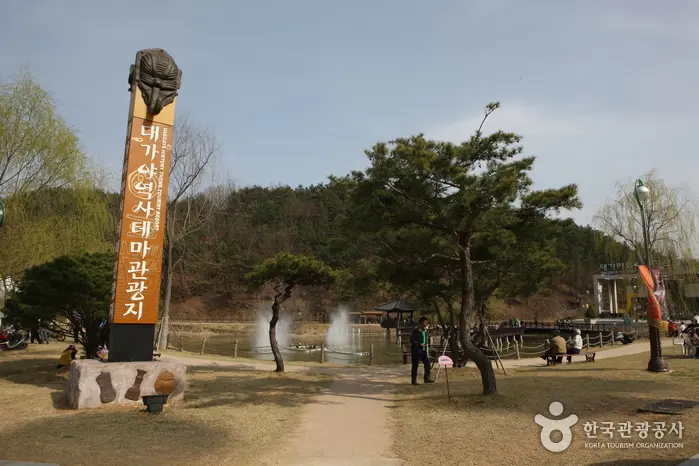
Daegaya History Theme Tourist Site
대가야역사테마관광지
A tourist site built around the theme of the history of Daegaya, the capital of the Daegaya kingdom, which brought Korea's earliest earthenware, ironware, and gayageum culture to brilliant flower. It offers attractions such as a 4D theater and experience halls on relics and the mysterious kingdom of Daegaya, along with a Daegaya exploration forest trail, allowing visitors to see, feel, and experience ancient culture through state-of-the-art facilities. Gaya was a confederation of states that existed from around the turn of the millennium until Daegaya was absorbed into Silla in 562; based on an advanced ironware culture, it pursued its own independent foreign exchanges and left behind fine cultural heritage such as the gayageum. As interest in Gaya has grown recently, research is actively underway on a '4 Kingdoms' historical perspective that includes Gaya alongside Goguryeo, Baekje, and Silla, rather than the traditional 'Three Kingdoms' framework.\nMoreLess

- 2
Hwanggeumteo Sutbul Village
황금터숯불촌
Located in downtown Goryeong, the capital of Daegaya, 'Hwanggeumteo Sutbul Galbi' is close to the road and has relatively good parking facilities, making it a good place to take a break for a meal while touring Daegaya's relics. The restaurant's exterior has the warm, clean feel of a wooden building, and the interior also feels cool and clean with its high ceiling and sunlight streaming in through large windows.\nMoreLess

- 3
Goryeong Daegaya Historic Site
고령대가야유적지
The Goryeong Daegaya Historic Site refers to the historic remains in Goryeong, capital of the Daegaya kingdom, which flourished for 520 years (42–562 CE). Research on Daegaya culture has become increasingly active recently, and general public interest in cultural exploration has been growing. It is a place worth visiting to examine the traces of ancient culture in order to properly understand the culture and history of the Korean Peninsula. Besides domestic visitors, it is also a place frequented by many Japanese tourists.\nMoreLess
- 4
Gaesil Village
개실마을
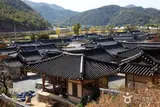
Gaesil Village, a clan village formed by the descendants of Jeompiljae Kim Jong-jik, catches the eye from the village entrance with its old houses offering a glimpse into the life of the Joseon-era yangban class. About 80% of the village's homes remain traditional hanok, creating a rustic charm where the natural scenery blends with the lines of tiled roofs, making it a traditional village that exudes the flavor of rural life. Within the village are the head house of Jeompiljae Kim Jong-jik (Folklore Material No. 62), who suffered persecution in the Muho Sahwa purge, and Doyeonjae (Cultural Property Material No. 111); the nearby Daegaya Museum also houses a memorial room for Kim Jong-jik, displaying Jeompiljae's writings and personal effects, Tangible Cultural Property No. 209.\nMoreLess
Source: Korea Tourism Organization (TourAPI) · Machine-translated