Following the Footsteps of Nammyeong Jo Sik
5 stops · 7 hours
Sancheong is home to the historic sites of Nammyeong Jo Sik. Alongside Toegye Yi Hwang, Nammyeong Jo Sik was one of the twin pillars of the Yeongnam School, a scholar who lived his entire life thoroughly removed from officialdom. This is a tour of sites related to Nammyeong and his school of thought: Sancheonjae, where Nammyeong Jo Sik devoted himself to scholarship; Deokcheon Seowon Confucian Academy, which enshrines his memorial tablet; Sesimjeong Pavilion; and a memorial hall. Sancheong is also famous for its plum blossoms. A journey to see the plum blossoms displaying their noble beauty in early spring — including the Jeongdangmae tree at the Danseoksa temple site and the Nammyeongmae tree at Sancheonjae — is not to be missed.
- Duration
- 7 hours
- Distance
- 37.7km
Along the way
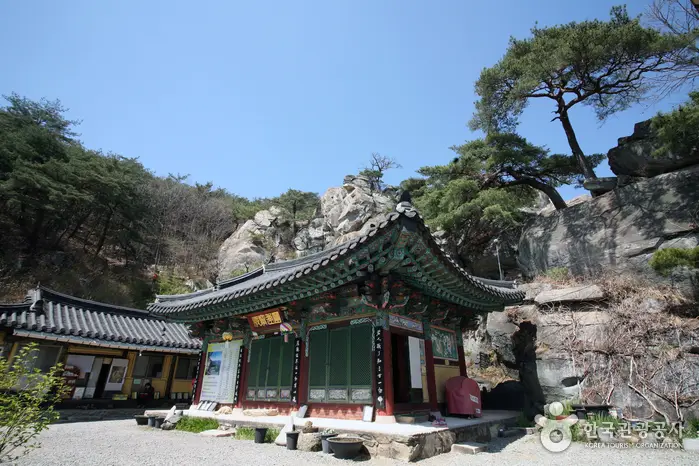
- 1Jeongchwiam Hermitage
정취암
Perched on a cliff of Daeseongsan Mountain, Jeongchwiam is said to have been founded by Master Uisang and is famous for its Buddhist paintings. Clinging to jagged cliffs, Jeongchwiam sits among the rock formations of Daeseongsan, located 40 li north of the old Danseong-hyeon county, and its auspicious energy was said to rival that of Geumgangsan, earning it the old name 'Sogeumgang' (Little Geumgang). In the sixth year of King Sinmun of Silla, Amitabha Buddha is said to have risen from the East Sea, casting two beams of auspicious light — one shining on Geumgangsan and the other on Daeseongsan. Master Uisang followed the two beams of light, building Wontongam Hermitage on Geumgangsan and founding Jeongchwisa (present-day Jeongchwiam) on Daeseongsan.\nMoreLess
- 2
East Three-Story Stone Pagoda at the Danseoksa Temple Site, Sancheong
산청 단속사지 동 삼층석탑
In front of the site of the main hall at the old Danseoksa temple site stand two pagodas, east and west; this pagoda, built on the east side, has a typical form with a two-tiered base supporting a three-story body. The lowest tier of the base was built using L-shaped stones together with the base slab. Above it, another tier was added to the base, then a body made by alternating body stones and roof stones was placed on top. At the very top, part of the finial ornament remains atop a square capstone. Overall, the proportions of the upper and lower sections are well balanced, and the body narrows appropriately as it rises, giving it a beautiful appearance. Compared with the West Pagoda standing alongside it, the scale and technique are nearly identical, indicating they were built in the same period. As a notable example of a paired-pagoda arrangement, it well illustrates the construction techniques of the late Unified Silla period.\nMoreLess
- 3Namsa Yedam Village
남사예담촌
Namsa Yedam Village offers a glimpse of the beauty of traditional Korean hanok architecture beyond its quiet stone walls; on the surface, its name means 'old walled village,' while at a deeper level it carries the meaning of emulating the spirit and etiquette of the scholars of old who lived behind those walls. Located at the entrance to Jirisan Mountain, Namsa Yedam Village, along with Hahoe Village in Andong, is one of Gyeongsang-do's representative traditional hanok villages. So renowned that Sancheong's Namsa Village has long been synonymous with Gyeongnam itself, this village is famous both as a village of the yangban aristocracy and as a traditional hanok village.\nMoreLess
- 4
Sancheonjae Nammyeongmae Plum Tree
산천재남명매
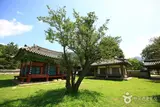
In the garden of Sancheonjae, located in Sa-ri, Sicheon-myeon, Sancheong-gun, beneath Cheonwangbong Peak of Jirisan, stands a plum tree planted with his own hands by Nammyeong Jo Sik (1501–1572) in 1561 (the 16th year of King Myeongjong), when he was 61. Sancheonjae, where Nammyeong devoted himself to scholarship and research, was built in 1561 (the 16th year of King Myeongjong) and renovated in 1818 (the 18th year of King Sunjo). It measures two bays in front and two bays on the side.\nMoreLess
- 5
Deokcheon Seowon Confucian Academy
덕천서원
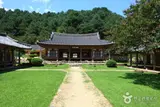
Deokcheon Seowon, located on a hill in Inam Village, Socheon-ri, Seolcheon-myeon, honors Tagyeong Kim Il-son as its principal enshrined figure — a victim of the Muo Sahwa literati purge during the reign of King Yeonsangun — along with his descendants Kim Chi-sam and Kim Hyeong, who are also enshrined there. Kim Il-son, a student of Jeompiljae Kim Jong-jik, took after his teacher in having an upright and forthright character.\nWhile compiling the 'Veritable Records of King Seongjong' in 1498, it came to King Yeonsangun's attention that Kim Il-son had included his teacher Kim Jong-jik's 'Elegy for the Righteous Emperor' in the historical draft, and he was executed as a result. After the Jungjong Restoration, he was posthumously granted the position of Dosungji and given the posthumous title Munmin.\nDeokcheon Seowon was originally built in 1919 on the hill in front of Gusan Village, Dugil-ri, Seolcheon-myeon, under the name Yucheonsa. It was relocated to Inam Village, Socheon-ri, Seolcheon-myeon in 1982, and moved again to its current location in 1993, at which point it was named Deokcheon Seowon. On the grounds stand the Deokcheonsa shrine and several monuments honoring virtuous deeds.\nMoreLess
Source: Korea Tourism Organization (TourAPI) · Machine-translated