Meeting Master Samyeong, Hero of the Imjin War
4 stops · 6 hours
Miryang is the hometown of Master Samyeong, who served as a leader of monk-soldiers during the Imjin War. Sites connected to Master Samyeong — his birthplace, Pyochungbi Monument, and Pyochungsa Temple — line the east-west axis of Miryang. This is a journey tracing the life of Master Samyeongdang, who led the fight to overcome national crisis as a leader of monk-soldiers: his birthplace, which still preserves the house where he was born; Pyochungbi Monument, said to sweat whenever the nation faces calamity; and Pyochungsa Temple, where his memorial tablet is enshrined.
- Duration
- 6 hours
- Distance
- 50.0km
Along the way
- 1
Master Samyeong's Birthplace
사명대사 생가지
This is where Master Samyeong was born in 1544 (the 30th year of King Jungjong) as the second son of jinsa Im Su-seong, and where he spent his childhood until age 13, when he left home to go to Master Sinmuk at Jikjisa Temple and become a monk.\nToday, the site preserves Sukcheongsa, the shrine; Yugyeongdang, the house where Master Samyeong was born and raised; and Samyeongdang, the sarangchae (men's quarters) where he once stayed. It was designated Gyeongsangnam-do Monument No. 116 in 1992. Master Samyeong spent his childhood here, and many anecdotes about him have been passed down. A rock where he is said to have rested whenever he occasionally returned to his hometown still remains, offering a glimpse into his footsteps and a place to reflect on his life.\nMoreLess
- 2
Pyochungbi Monument
표충비
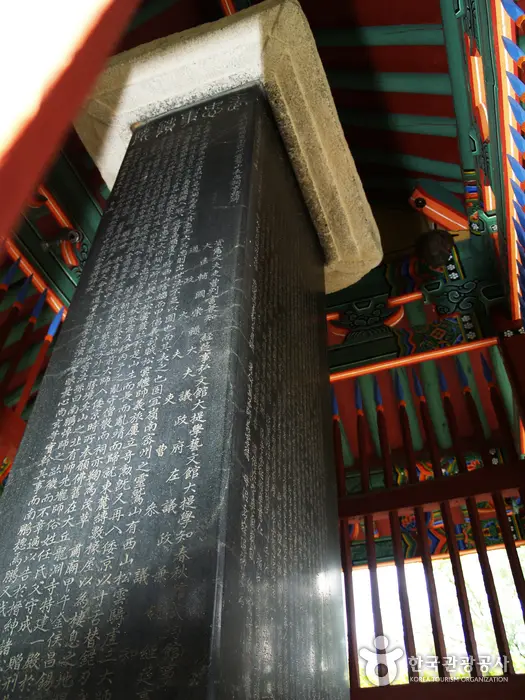
A monument pavilion located on the grounds of Hongjesa Temple in Muan-myeon, Miryang, dedicated to Master Samyeongdang Songun, also known as the Samyeongdae Master Monument. It was erected to honor the lofty achievements of Yujeong, who led an army of monk-soldiers to decisively defeat the Japanese forces during the Imjin War and secured the return of 3,000 Koreans taken as prisoners of war to Japan. It was built in 1742 (the 18th year of King Yeongjo) east of Pyochungsa, using stone brought from Gyeongsan by Nambung, a monk of the fifth generation after the master.\nMoreLess
- 3Yeongnamnu Pavilion, Arang-gak Shrine
영남루, 아랑각
A Joseon-era shrine located in Naeil-dong, Miryang, Gyeongsangnam-do, standing in a bamboo grove just below Yeongnamnu Pavilion beside the Namcheon River in Miryang. This shrine pavilion is said to have been built during the reign of King Myeongjong of Joseon to honor Arang, who died to protect her chastity as a maiden.\nIn 1965, as the original building had grown old, the present Arang-gak was rebuilt with donations from local residents and those from the area living elsewhere, along with government support. The shrine is a three-bay building with a gabled roof, and its main gate, formed by a triple gateway, bears the name Jeongsun-mun. Inside the shrine, a portrait of Arang painted by Yidang Kim Eun-ho and her memorial tablet are enshrined.\nMoreLess
- 4Maneosa Temple
만어사
Maneosa is a legendary temple said to have been founded in 46 CE (the fifth year of King Suro's reign) by King Suro, founder of the Gaya kingdom. The 'Eosan Bulyeong' (Buddha's Reflection on Fish Mountain) entry in the 'Tapsang' chapter of the Samguk Yusa records the story behind Maneosa's founding.\nKing Suro built the temple to commemorate this, and, drawing on the meaning of a shoal of fish turned to stone by the grace of the Buddhist teachings, named it Maneosa ('Temple of Ten Thousand Fish'). Maneosa preserves the mysterious legend that countless fish were turned to stone by the Buddha's grace and now listen to the dharma. In keeping with this legend, a wide boulder field in front of the main hall contains a pile of stones called 'Eosan Bulyeong,' said to be the transformed school of fish; striking them even today produces a clear ringing sound, so they are also called 'bell stones' (jongseok), and the site is designated a Gyeongsangnam-do Monument.\nMoreLess
Source: Korea Tourism Organization (TourAPI) · Machine-translated