Walking the Alps of Yeongnam
3 stops · 7 hours
Cheonhwangsan and Jaeyaksan Mountains in Miryang are high mountainous terrain over 1,000m above sea level, earning the area the nickname 'the Alps of Yeongnam.' In particular, Sajapyeong Plateau on Jaeyaksan is famous for its spectacular dance of silver grass in autumn, making it one of the best autumn hiking destinations. After touring the valleys of Hobakso and Eoreumgol (Ice Valley), you can ride the Eoreumgol cable car to comfortably take in the terrain of Cheonhwangsan and Jaeyaksan. A course descending through Cheonhwangsan and Jaeyaksan to Pyochungsa Temple is highly recommended.
- Duration
- 7 hours
- Distance
- 8km
Along the way
- 1Hobakso Valley (Sirye Hobakso)
호박소계곡(시례 호박소)
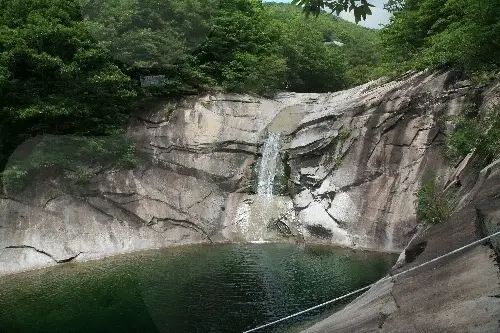
About 32km from downtown Miryang, in Sirye Village, Nammyeong-ri, Sannae-myeon, lies Eoreumgol (Ice Valley), which extends down from Jaeyaksan (Cheonhwangsan). About 3km from there, Hobakso Valley, a tributary of Gajisan Mountain, appears. Water cascading in white foam over granite polished ivory-white by the valley stream over hundreds of thousands of years, along with the surrounding natural scenery, is so beautiful that it was selected as one of Korea's 100 finest waters.\nMoreLess
- 2
Jaeyaksan Sajapyeong Plateau (Jaeyaksan)
재약산 사자평(재약산)
A vast plateau located southeast of the summit of Jaeyaksan (1,189m), one of the peaks of the Yeongnam Alps. Jaeyaksan is known for its magnificent scenery, earning it the nickname 'Samnam Geumgang' (the Geumgangsan of the three southern provinces). While the terrain is generally gentle, the summit area features massive rock cliffs. The ridge running from Sumibong through Sajabong, Neungdongsan, Sinbulsan, to Chwiseosan is a broad silver grass plain known as the Sajapyeong Plateau; at an elevation of about 800m, the area has been developed as pastureland.\nMoreLess
- 3
Pyochungsa Temple
표충사
Located on the southwestern slope of Jaeyaksan (Cheonhwangsan), Pyochungsa is a temple with a thousand-year history. In the first year of King Muyeol of Silla (654), Master Wonhyo founded the temple hall and named it Jungnimsa. In the fourth year of King Heungdeok (829), Master Hwangmyeon enshrined three relics of the Buddha's true body, erected a three-story stone pagoda to house them, and greatly rebuilt the temple hall, renaming it Yeongjeongsa. Later, in 889 (the third year of Queen Jinseong), National Preceptor Bou gathered 500 monks and greatly revived Seon practice, making it the second-ranked Seon temple in the east; in 1286 (the 12th year of King Chungnyeol of Goryeo), National Preceptor Iryeon, author of the Samguk Yusa, welcomed some 1,000 followers and revived the Buddhist teachings, making it the leading Seon temple in the east. In 1290 (the 16th year of King Chungnyeol), National Preceptor Cheonhui took charge of Seon practice, and the temple came to be called a renowned temple of the nation. In 1839, Master Wolpa relocated the Pyochung shrine — then located in Samgang-dong, Muan-myeon, present-day Miryang — to its current site in order to honor the loyal service of his eighth-generation predecessor, Master Samyeongdang Songun, during the Imjin War, and renamed the temple Pyochungsa.\nMoreLess
Source: Korea Tourism Organization (TourAPI) · Machine-translated