A Journey Following King Danjong's Exile
6 stops · 5 hours
Forced to step down as Supreme King by Grand Prince Suyang, Danjong was demoted to Prince Nosan after the failed attempt to restore him to the throne, and was exiled to Cheongnyeongpo. The road from Jucheon, past Gundeungchi and Baeilchi, to Cheongnyeongpo is a journey steeped in Danjong's sorrow and heartbreak. From Jangneung Royal Tomb, reached after passing Seondol, to Gwanpungheon and Jaryeongnu in downtown Yeongwol, and on to Cheongnyeongpo, the site of his exile, the journey is both poignant and desolate.
- Duration
- 5 hours
- Distance
- 8.5km
Along the way
- 1Seondol
선돌
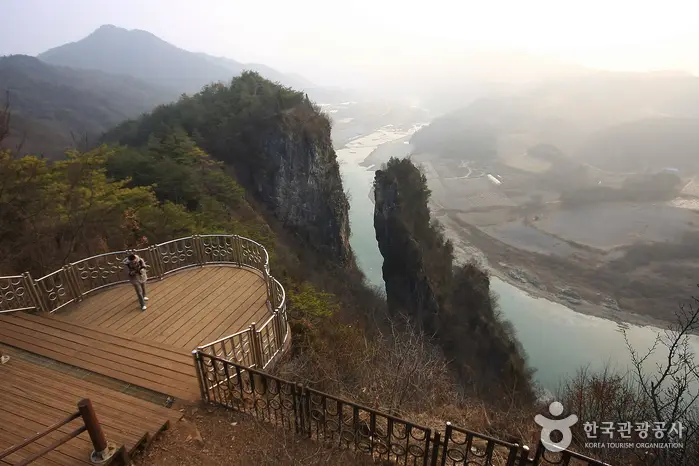
Seondol is a roughly 70m-high rock formation standing on a cliff within the Seogang River in Bangjeol-ri, Yeongwol-eup. Seondol refers to a standing rock that looks as if a great sword had cleaved down through the cliff and stopped partway. The striking rock formation rising just in front of this standing stone is mysterious to behold. The river seen through the gap between the cliff and the standing rock also forms scenery reminiscent of parts of Geumgangsan, drawing many visitors to admire Seondol. MoreLess
- 2
Jangneung Royal Tomb
장릉
The tomb of Danjong, the 6th king of Joseon, designated Historic Site No. 196 on May 26, 1970. After his uncle Grand Prince Suyang seized the throne, Danjong was exiled to Cheongnyeongpo and put to death at the age of 17; his body was set adrift on the river, but the local clerk Eom Heung-do secretly buried him here. MoreLess
- 3
Bodeoksa Temple
보덕사
Bodeoksa is an old temple located in Neungdong, 3km north of Yeongwol-eup. It is said to have been founded in 686 by State Preceptor Uisang under the name Balbonsan Jideoksa; another account holds that it was founded in 714 by Great Master Hyegak. In 1161 (the 32nd year of King Injong, the 17th ruler of Goryeo), Great Masters Seolheo and Wongyeong expanded it with the addition of Geungnakbojeon Hall, Saseongjeon Hall, Yeomburam Hermitage, Gobeopdang Hall, and Chimunnu Pavilion. MoreLess
- 4
Jangneung Barley Rice House
장릉보리밥집
Jangneung Barley Rice House looks every bit the rustic local eatery, its modest traditional tile-roofed exterior blending beautifully with the surrounding scenery and carrying an air of old-fashioned charm. Its signature dishes are barley rice and tofu — names simple enough on their own to convey a warm, homely feeling. The barley rice is reasonably priced for a meal and is filled with rustic side dishes not found in the city. The rice is made with potato and barley, served with more than 12 side dishes. MoreLess
- 5Jagyuru Pavilion and Gwanpungheon
자규루, 관풍헌
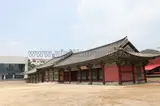
Jagyuru was where Danjong (r. 1452-1455) briefly stayed after being dethroned and exiled by Sejo (r. 1455-1468). Danjong is said to have often climbed this pavilion to compose poems about the jagyu (cuckoo). 'Jagyu' refers to a cuckoo said to cry so mournfully it coughs up blood, and the poems compared his own plight to the bird's. MoreLess
- 6Cheongnyeongpo
청령포
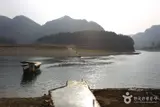
Cheongnyeongpo is surrounded by water on its east, south, and north sides, while to the west rise the steep cliffs known as Yugyukbong — making it an island-like place accessible only by ferry. Danjong lived out his exile here, cut off from the outside world; at the time there was a house here where he could stay, and it is said that the local clerk Eom Heung-do would secretly visit at night to pay his respects. MoreLess
Source: Korea Tourism Organization (TourAPI) · Machine-translated