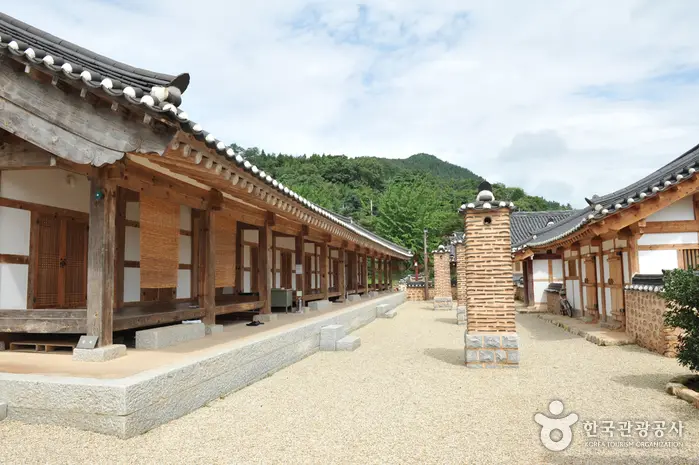
A Historical Journey Through Naju, Linking Goryeo and Joseon
4 stops · 5-6 hours
Gyeon Hwon founded Later Baekje with Naju as its center, and King Taejo Wang Geon of Goryeo formed a bond with the woman who would later become Queen Jangwha at Wansacheon Spring in Naju. Naju has been known as a thousand-year seat of a mokchon (regional governor) since it became Naju-mok during the reign of King Seongjong of Goryeo. As shown by the fact that the name 'Jeolla-do' was coined by taking one character each from Jeonju and Naju, Naju can rightly be called a historic town that has faithfully preserved a thousand years of history.
- Duration
- 5-6 hours
- Distance
- 31.8km
Along the way
- 1
Naju Hyanggyo
나주향교
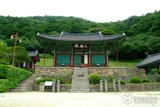
Naju-mok was the second-largest town in Honam after Jeonju-bu, so its hyanggyo (local Confucian school) was correspondingly large in scale — a scale that continues to this day. Naju Hyanggyo comprises Myeongnyundang Hall, Daeseongjeon Shrine, the East and West Mu buildings, the East and West Jae dormitories, the Inner and Outer Sinmun gates, the Gyojiksa (custodian's quarters), Chunghyogwan Hall, Bojeongak Pavilion, and a Hamabi (dismount stele), among others. MoreLess
- 2Naju Moksanaea
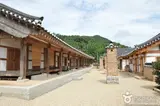
나주목사내아
Naju Moksanaea was the official residence of the Naju magistrate during the Joseon period, laid out with the same floor plan as the main quarters (anchae) of an upper-class house. The anchae was built in 1825 (the 25th year of King Sunjo's reign) and follows the traditional Korean hanok layout in a 'ㄲ' shape. MoreLess
- 3
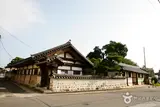
Unheungsa Temple (Naju Unheungsa)
운흥사(나주 운흥사)
Unheungsa was an old temple at the foot of Deongnyongsan. According to the Jinyeomun Sajungchanggi (Record of the Fourth Reconstruction of Jinyeomun Gate), written by Jeong Mun in 1775, National Preceptor Doseon, drawn by the excellent geomancy of the site, came from Heungdeok during the reign of Emperor Xizong of Tang (846-887) and held his first dharma assembly here at Doseongam Hermitage, laying the temple's foundation; later, during the reign of King Hyogong of Silla (897-911), Ungchisa Temple was founded here at Ungjeom. MoreLess
- 4
Bulhoesa Temple (Naju Bulhoesa Stone Jangseung)
불회사(나주 불회사석장승)
The stone jangseung (village guardian totem poles) of Bulhoesa Temple stand two abreast along a narrow path about 300m from the temple entrance. The front of the jangseung bears the inscription 'Dangju,' in which the characters 唐 (dang) and 周 (ju) appear to have been used in the sense of 'road' (道). MoreLess
Source: Korea Tourism Organization (TourAPI) · Machine-translated