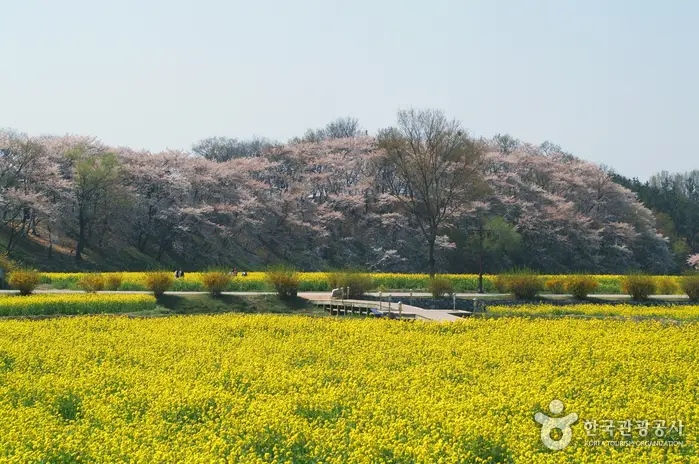
Meeting the People of Silla from a Thousand Years Ago
10 stops · 5 hours
Gyeongju is a place where the Silla era and the present coexist. The many burial mounds rising gently throughout downtown Gyeongju form a treasure house of Silla-era cultural heritage, having yielded numerous relics that offer clues to how the Silla people lived. Strolling among the quiet mounds of Daereungwon and Bonghwangdae feels almost like being spoken to by the people of Silla across a thousand years.
- Duration
- 5 hours
- Distance
- 10km
Along the way
- 1
Wolseong (Banwolseong)
월성(반월성)
This was the royal citadel of Silla, built in 101 CE, the 22nd year of King Pasa, and remained the site of the palace until Silla's fall in 935. Because its shape resembles a crescent moon, it was called \"Sinwolseong\" (New Moon Fortress) or \"Wolseong\" (Moon Fortress), and, as the fortress where the king resided, it was also called \"Jaeseong.\" Since the Joseon period it has been known as Banwolseong (Half-Moon Fortress), the name it retains today.\nMoreLess
- 2
Seokbinggo (Stone Ice House)
석빙고
A kind of natural refrigerator, it was long believed to date to the Silla period based on records of ice being stored here in the 6th year of Silla King Jijeung (505), but the present stone ice house has been determined to have been built in 1738, the 14th year of King Yeongjo of Joseon. Its entrance opens toward the inside of Wolseong; going down a stairway, the interior deepens along the slope of the fortress. It measures 12.27m long, 5.76m wide, and 5.21m high, entirely built of finished stone, with long stone beams spanning between five arched pillars.\nMoreLess
- 3
Gyerim Forest
계림
This forest, located between Cheomseongdae Observatory and Wolseong Fortress, is a storied site said to be the birthplace of Kim Al-ji, ancestor of the Gyeongju Kim clan (Historic Site No. 19). During the reign of Silla's King Talhae, Hogong heard a rooster crowing in this forest, and on approaching found a golden chest hanging, glowing, from a tree branch. When he opened the lid, a baby boy emerged from inside -- so the boy was given the surname Kim ("gold") and the name Al-ji, and this forest, originally called Sirim or Gurim, came to be known as Gyerim ("Rooster Forest"). \nMoreLess
- 4Cheomseongdae Observatory
첨성대
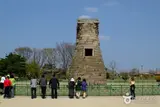
Built during the reign of Silla's Queen Seondeok, Cheomseongdae is the oldest surviving astronomical observatory in East Asia and the only one of its kind. \nBuilt of granite, it stands 9.17m tall, with an upper diameter of 3.1m, a lower diameter of 5.17m, and a base stone measuring 5.35m on each side. \nMoreLess
- 5Gyeongju Hyanggyo (Confucian School)
경주향교
This is owned by the Gyeongsangbuk-do Hyanggyo Foundation. The exact date of its founding is unknown; it is said to have been established in the Goryeo period to enshrine and honor the tablets of virtuous Confucian scholars and to provide secondary education and moral instruction for the local populace.\nMoreLess
- 6
Lunch (Lee Pung-nyeo Guro Ssambap)
점심식사(이풍녀 구로쌈밥)
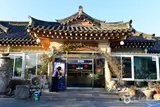
Guro Ssambap, as comfortable as visiting your hometown and with flavors reminiscent of a mother's home cooking, serves its guests with real care; with reasonable prices and Gyeongju's distinctive ssambap specialty, it has become a well-known Gyeongju destination featured and recommended by various media outlets. \n* Info : 054-749-0600, 0060\nMoreLess
- 7Daereungwon Tomb Complex
대릉원
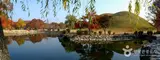
Tomb No. 155, excavated in 1973 and known as Cheonmachong ("Heavenly Horse Tomb"), is a typical Silla-style wooden-chamber tomb covered with stone and earth. The mound stands 12.7m high and 50m in diameter; inside the earthen mound is a layer of river stones, within which is a wooden chamber 6.5m long, 4.2m wide, and 2.1m high, at the center of which a wooden coffin held the deceased. A total of 11,526 relics were excavated, among them the Cheonmado ("Heavenly Horse Painting"), the first such painting ever found in a Korean tomb and a treasure of great value.\nMoreLess
- 8
Bonghwangdae
봉황대
This is a cliff at the entrance to Byeokgye Reservoir in Pyeongchon-ri, Gungnyu-myeon, Uiryeong-gun, about 23km from Uiryeong town. Bonghwangdae, where massive, oddly shaped rock formations create a spectacular scene, takes its name from its resemblance to a phoenix's head. \nMoreLess
- 9
Hwangnyongsa Temple Site
황룡사지
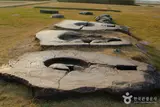
The site of Hwangnyongsa Temple stretches out in front of Bunhwangsa Temple in Guhang-dong, Gyeongju. As Silla's largest temple and a great temple dedicated to protecting the nation, it was a storied site where the essence of early Silla Buddhist culture was concentrated. According to its founding history, in the 14th year of Silla King Jinheung (553), while a new palace was being built east of Wolseong, a yellow dragon was said to have appeared there, so the site was converted into a temple instead and named Hwangnyongsa ("Yellow Dragon Temple"), completed 17 years later in 569.\nMoreLess
- 10
Bunhwangsa Temple
분황사
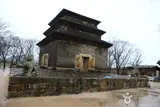
Bunhwangsa is a branch temple of Bulguksa, the head temple of the 11th District of the Jogye Order of Korean Buddhism. Adjoining the Hwangnyongsa Temple site, Bunhwangsa is also famous for its brick-style stone pagoda (mojeon seoktap), designated National Treasure No. 30.\nMoreLess
Source: Korea Tourism Organization (TourAPI) · Machine-translated