Encountering the Splendid History and Culture of Silla
6 stops · 6 hours
Gyeongju is a living classroom of Silla history. A tour is best started at the Gyeongju National Museum, home to the Divine Bell of King Seongdeok the Great, popularly known as the Emille Bell. Tracing Silla's history carefully here, you come to understand the saying that "you see as much as you know." Gyeongju Donggung Palace and Wolji Pond are especially beautiful at night, and the road to the tomb of Queen Seondeok is lined with an impressive pine forest.
- Duration
- 6 hours
- Distance
- 13km
Along the way
- 1
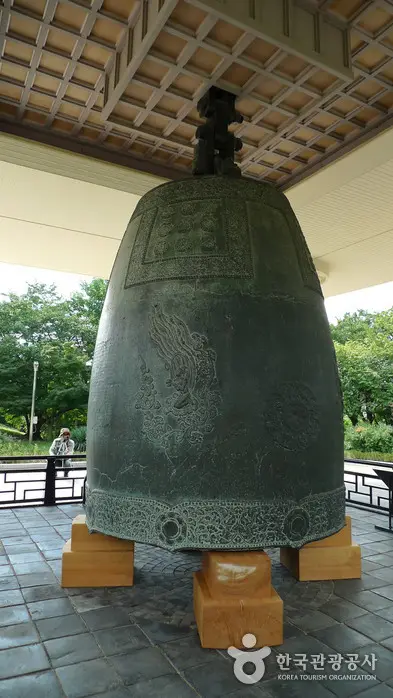
Divine Bell of King Seongdeok the Great
성덕대왕신종
The largest surviving bell in Korea, it stands 3.75m tall with a mouth diameter of 2.27m and a wall thickness of 11-25cm; a precise measurement by the Gyeongju National Museum in 1997 put its weight at 18.9 tons. Silla's King Gyeongdeok wished to cast a bell to spread word of the virtue of his father, King Seongdeok, but did not live to see it completed; his successor, King Hyegong, finished it in 771 and named it the Divine Bell of King Seongdeok the Great.\nMoreLess
- 2
Lunch (Suseokjeong)
점심식사(수석정)
Suseokjeong, the first restaurant in Gyeongju to serve hanjeongsik (Korean set-course meals), has stuck exclusively to hanjeongsik for 15 years. It is one of Gyeongju's most representative hanjeongsik restaurants, popular with Japanese tourists and domestic visitors to Gyeongju alike\nMoreLess
- 3Donggung Palace and Wolji Pond, Gyeongju
경주 동궁과 월지
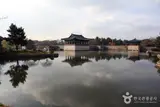
This is the site of a detached palace of the Silla royal court, west of Anapji Pond (Wolji). Used as Donggung, the residence of the crown prince, along with its auxiliary buildings, it is said to have hosted banquets on occasions of national celebration or when receiving honored guests. It was also here, in 931, that Silla's King Gyeongsun, after suffering an invasion by Gyeon Hwon, invited Wang Geon, founder of Goryeo, and pleaded his desperate situation at a banquet. \nMoreLess
- 4
Neungjitap Pagoda Site
능지탑지
This is a reassembly of pagoda materials that had been scattered across Namsan in Gyeongju, North Gyeongsang Province, traditionally known as Neungjitap or Yeonhwatap. It is believed to have originally been a five-story pagoda, with stones carved with the twelve zodiac guardian figures set around the platform and lotus-patterned stones stacked above.\nMoreLess
- 5Tomb of Queen Seondeok
선덕여왕릉
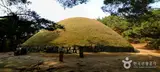
The tomb of Queen Seondeok is a simple round earthen mound about 73m in circumference, with little ornamentation beyond a two-tiered natural-stone retaining wall at its base. Born the daughter of King Jinpyeong, who had no son, Queen Seondeok became Silla's first reigning queen under the Silla royal doctrine of "sacred bone" lineage. During her 16-year reign she built Bunhwangsa Temple and Cheomseongdae Observatory, and, notably, erected the nine-story wooden pagoda of Hwangnyongsa, the largest in Silla, a pinnacle of Silla Buddhist architecture.\nMoreLess
- 6
Tomb of King Sinmun, Gyeongju
경주 신문왕릉
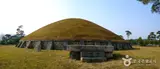
Past the site of Sacheonwangsa Temple and a little further along Munmu-ro, the tomb of the 31st king, Sinmun, lies to the left. In front of the tomb is a well-appointed parking area, and the burial ground, planted with well-grown pines, is neatly kept with lawn. King Sinmun (r. 681-692) was the eldest son of King Munmu, who achieved the unification of the Three Kingdoms, and ascended the throne after him. Over his 12-year reign he reorganized the state administration, consolidated royal authority, and, to promote scholarship and cultivate talent, established Gukhak, the national Confucian academy.\nMoreLess
Source: Korea Tourism Organization (TourAPI) · Machine-translated