Following the Footsteps of Scholar Hoejae Yi Eon-jeok
4 stops · 6 hours
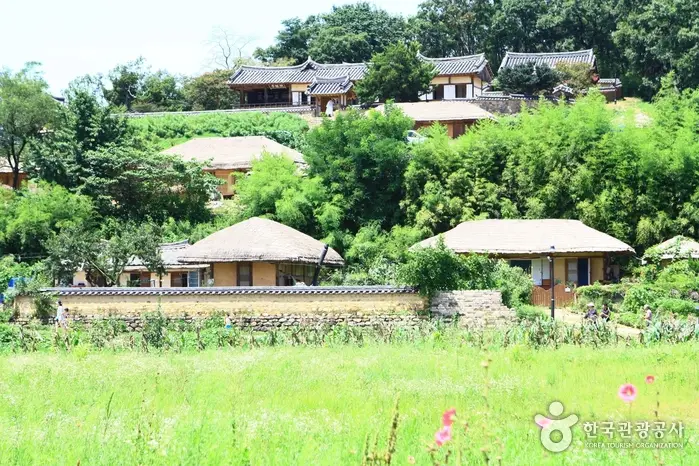
Yangdong Village in Gyeongju, inscribed on the UNESCO World Heritage list alongside Andong's Hahoe Village, is a place that preserves a long history and tradition. Its old alleyways, still steeped in a bygone atmosphere, are perfect for a quiet, leisurely stroll. Rounding out the trip with Oksan Seowon and Dongnakdang, both marked by the presence of the Joseon-era Neo-Confucian scholar Hoejae Yi Eon-jeok, makes for an ideal cultural heritage tour.
- Duration
- 6 hours
- Distance
- 13km
Along the way
- 1Yangdong Village
양동마을
Yangdong Folk Village is Korea's largest village to have preserved its traditional Joseon-era culture and natural setting intact, formed by the Wolseong Son clan and the Yeogang Yi clan. It holds many cultural properties, including national treasures, treasures, and folklore materials, and the entire village is designated Important Folklore Material No. 189. With its scale and state of preservation, the number and authenticity of its cultural assets, and its beautiful, unspoiled rural character, the village drew even Britain's Prince Charles on a visit in 1993. \nMoreLess
- 2Oksan Seowon
옥산서원
Oksan Seowon, a Confucian academy built in 1929, testifies to the determination of the local Confucian scholars who, even under the loss of national sovereignty, strove to uphold the traditional culture of loyalty, filial devotion, and propriety.\nMoreLess
- 3Dongnakdang
독락당
Dongnakdang is the sarangchae (men's quarters) of the house built by the scholar Hoejae Yi Eon-jeok (1491-1553) after he retired from office and returned to his hometown. Built in 1516, the 11th year of King Jungjong of Joseon, this paljak-roofed building is four kan wide at the front and two kan deep, comprising an ondol room (1 x 2 kan) and a daecheong wooden-floored hall (3 x 2 kan).\nMoreLess
- 4
Thirteen-Story Stone Pagoda at Jeonghyesa Temple Site
정혜사지 십삼층석탑
Standing on the site of Jeonghyesa Temple in Gyeongju, this pagoda rises with a 13-story body set on a single earthen platform -- a distinctive form with no comparable example from the Unified Silla period.\nMoreLess
Source: Korea Tourism Organization (TourAPI) · Machine-translated