A Naturalist Journey to Korean Red Pines and Caves
4 stops · 7 hours
Samcheok, where the Baekdudaegan mountain range runs from north to south, is a region of stunning mountain scenery. Rugged, deep mountains over 1,000m above sea level, such as Cheongoksan and Deokhangsan, stand here, along with Jungyeongmyo and Yeonggyeongmyo tombs, where clusters of towering Korean red pines grow. With Cheoneunsa Temple, where Yi Seung-hyu of the Goryeo dynasty wrote the 《Jewang Ungi (Rhymed Chronicles of Emperors and Kings)》, and Hwanseongul and Daegeumgul, the finest limestone caves in Korea, it is a wonderful place to rest amid pristine nature.
- Duration
- 7 hours
- Distance
- 29km
Along the way
- 1Cheoneunsa Temple
천은사
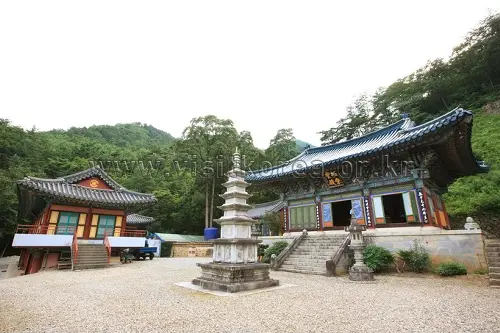
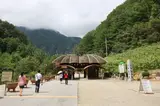
Cheoneunsa is where Yi Seung-hyu wrote the Jewang Ungi, the great epic poem of the Korean people. Its founding history traces back to Baengnyeondae, said to have been built when three dhuta hermit-sages brought a white lotus from India in the 17th year of King Gyeongdeok's reign (738). In 1899, when Mokjoreung, the tomb of Yi Seong-gye's 4th-generation ancestor, was built in Hwalgi-ri, Miro-myeon, this temple was designated the royal memorial temple and, having 'received the king's grace,' was renamed Cheoneunsa. Visitors enter the temple grounds along a path of small pebbles, lined on both sides with cherry trees that bloom in a riot of pale pink blossoms each spring.MoreLess
- 2Yeonggyeongmyo Tomb
영경묘
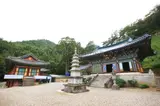
This is the tomb of Lady Yi, the 5th-generation grandmother of King Taejo of Joseon and mother of Mokjo. In the 3rd year of Emperor Gojong's Gwangmu era (1899), the tomb was restored together with Jungyeongmyo, the tomb of Taejo's 5th-generation ancestor, and a shrine hall and stele pavilion were built. The area is scenic, with a dense pine forest, and a memorial rite is held every April 20 by the Jeonju Yi clan. Jungyeongmyo lies 4km away in Hwalgi-ri.MoreLess
- 3
Jungyeongmyo Tomb
준경묘
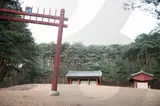
Located in Neunggok, Hwalgi-ri, this is the tomb of General Yangmu, the 5th-generation ancestor of King Taejo Yi Seong-gye of Joseon, associated with the legend of the white ox and the golden crown foretelling the rise of the Joseon dynasty. In 1899, it was restored along with Yeonggyeongmyo, and a stele pavilion and a stele marking the site of Mokjo the Great King's former residence were built. The area's dense pine forest and old-growth woods are especially suited for forest bathing, and there is a tourist farm nearby.MoreLess
- 4
Hwanseongul Cave, Daegeumgul Cave
환선굴, 대금굴
Hwanseongul is a limestone cave formed about 530 million years ago and is the largest of its kind in Asia. Inside the cave, stalactites, stalagmites, and columns in the shapes of a beauty, a turtle, a jar, and more are magnificently well developed. Daegeumgul, formed around the same time as the nearby Hwanseongul and Gwaneumgul caves, was opened to the public after a total preparation period of seven years — four years to discover the cave and three more to install facilities. Inside, cave formations such as stalactites, stalagmites, and columns are well developed.MoreLess
Source: Korea Tourism Organization (TourAPI) · Machine-translated