In Search of Samcheok's Famous Film Locations
8 stops · 7 hours
Gangwon-do's Samcheok is a region where mountains, valleys, and the sea come together in harmony. With its many beautiful landscapes, it is also well known as a filming location for movies. Stepping into Samcheok's blue sea, tranquil mountain temples, and villages feels like walking into a scene from a film. Why not follow Samcheok's film locations and relive that cinematic feeling once more?
- Duration
- 7 hours
- Distance
- 35km
Along the way
- 1
Isabu Lion Park
이사부사자공원
A family theme park carrying on the pioneering spirit and legacy of Silla general Isabu, it offers some of the closest views of the East Sea's beautiful scenery. The year-round Teobi Sled course will bring back a sense of childhood wonder for families, friends, and couples, and in the evening visitors can enjoy classic films.MoreLess
- 2Samcheok Beach
삼척해변
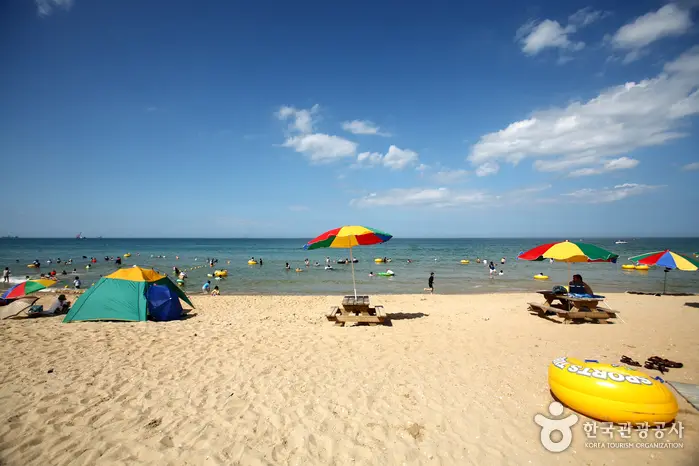
Located about 1.4km from downtown Samcheok, it is the largest beach in the area, with a wide sandy shore 1.2km long and 100m wide. With its dense pine forest, clean sand, and shallow water, people of all ages can enjoy swimming, and it is relatively well equipped with various facilities and amenities.MoreLess
- 3
Beach Sculpture Park
비치조각공원
Beach Sculpture Park is one of the main attractions along the New Millennium Coastal Road. Tourists visit year-round, not just in summer, to admire the sculptures while resting and cooling off, making it a popular spot. In summer, small concerts are also held at the outdoor stage in the park.MoreLess
- 4
Cheokju Donghaebi and Pyeongsutochanbi Monuments
척주동해비및 대한평수토찬비
The inscription on the Cheokju Donghaebi Monument was composed by Heo Mok, magistrate of Samcheok; the monument measures 170cm in height, 76cm in height, and 23cm in thickness. Erected in the 3rd year of King Hyeonjong's reign (1662), the Cheokju Donghaebi — also known as the 'Toejobi (退潮磑)' — was built to prevent damage from the tides, and was originally erected on Mallido Island. The inscription on the Pyeongsutochanbi Monument was likewise composed and written by Heo Mok, magistrate of Samcheok. It is carved with 48 of the 77 characters from the 'Daeu Sujeon (大禹手篆)' calligraphy on China's Hengshan Stele (衡山磑), and the text praises the king's grace while commemorating his own achievements as a magistrate.MoreLess
- 5
Lunch (Buil Makguksu)
점심식사(부일막국수)
Located a short distance from downtown, its rural scenery and open, breezy countryside atmosphere put diners at ease. * Inquiries/Information: 033-572-127MoreLess

- 6Jukseoru Pavilion
죽서루
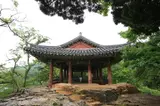
Perched atop a cliff above the Osipcheon Stream, Treasure No. 213 Jukseoru is one of Korea's representative pavilions. It was rebuilt on its old site in the 3rd year of King Taejong of Joseon (1403) by Kim Hyo-son, magistrate of Samcheok, and has since been repaired, repainted, and expanded dozens of times up to the present day. Jukseoru has an architecturally notable and beautiful lower level supported by 17 pillars — 9 set directly on natural rock and 8 built on stone bases — while its upper level has 20 pillars and a hip-and-gable roof.MoreLess
- 7Maengbang Beach
맹방해변
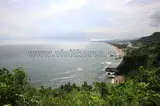
About 7km from downtown Samcheok, this pilot beach lies within the Maengbang tourist area, where access roads are well maintained and tourism development is ongoing; it is already well known nationwide for its image as a pristine beach.MoreLess
- 8
Sinheungsa Temple
신흥사
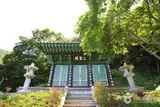
Located in Dongmak 6-ri (Yang-ri), Geundeok-myeon, Samcheok. It was founded in the 1st year of Silla's Queen Minae (838) by State Preceptor Beomil under the name Jiheungsa, in Jiheung-ri, Bukpyeong-eup (present-day Donghae). In the 21st year of King Sunjo's reign (1821), Magistrate Yi Heon-gyu provided substantial funding and the temple was renamed Sinheungsa. It was later renovated in July of the 14th year of King Cheoljong's reign (1863), and a shrine called Eunjunggak was built to hold an annual memorial service honoring the magistrate's kindness. There were also once the hermitages Cheongnyeonam and Banyaam near the temple.MoreLess
Source: Korea Tourism Organization (TourAPI) · Machine-translated