Enjoying Goseong's Unique Traditional Culture
7 stops · 6 hr 30 min
Goseong, located at the northernmost tip of Gangwon-do, is a region where traditional culture still breathes -- from uniquely shaped traditional houses built to withstand the cold, to Cheonggwanjeong Pavilion, which appears in a work by the scholar Song Gang Jeong Cheol. As you tour the villages and houses nestled in the beautiful mountains, along with pavilions overlooking the blue sea, you can naturally feel what makes Goseong special.
- Duration
- 6 hr 30 min
- Distance
- 30km
Along the way
- 1
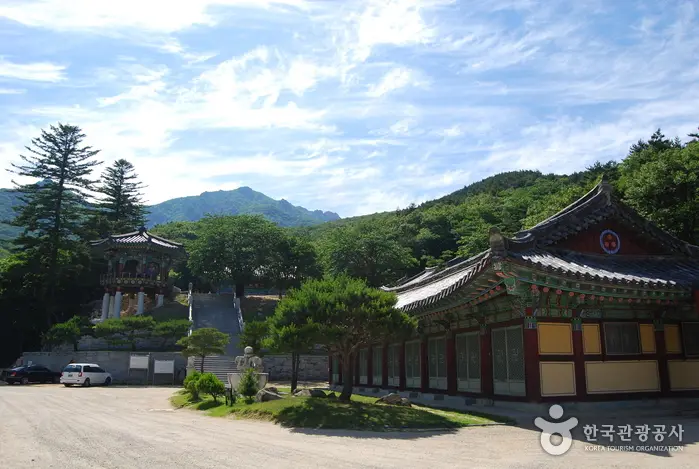
Hwaamsa Temple
화암사
Hwaamsa Temple is located 1.5km from the World Jamboree site in Sinpyeong-ri, and was founded by Master Jinpyo in the 5th year of King Hyegong, the 36th ruler of Silla. Records state that the temple once housed a six-panel folding screen depicting Avalokitesvara (Gwanseeum Bosal) that had been handed down as a gift from King Jeongjo, though what became of it after liberation is unknown; there are 15 stupas including the Jugamdang stupa, and there were once 16 portraits including the portrait of Jinpyodang. The surrounding scenery is outstanding, including the clean Hwaam Valley at the foot of Sinseonbong Peak, as well as Subawi Rock and Ulsanbawi Rock.MoreLess
- 2Cheonggwanjeong
청간정
Cheonggwanjeong (淸澗亭), located on the East Sea coastal foothills in Cheonggan-ri, Toseong-myeon, is a cozy two-story pavilion with an octagonal roof, built atop rugged cliffs where the Cheonggancheon Stream flowing down from the valleys of Seoraksan Mountain meets the surging blue waves. It is counted as one of the finest of the Gwandong Palgyeong (Eight Scenic Views of Gwandong) for the majesty of its sunrises and moonrises, and for the mesmerizing sight of incoming waves rising like billowing clouds before vanishing like mist.MoreLess
- 3
Ayajin Beach
아야진해변
Located 6km north of Sokcho and about 500m off National Route 7, this beach has beautiful surroundings that draw a growing number of summer visitors each year. Large and small rocks, clear water, and a clean sandy beach combine to make it a great spot for family vacations. The beach is 600m long and 50m wide, with a depth of 1.5-2m up to 30m from the shore. More people are also visiting on purpose to buy fresh squid cheaply in the early morning.MoreLess
- 4
Munam Port
문암포구
Munam-ri Port is a small harbor, but with striking rock formations extending into the sea behind it, it has the charm of a quiet fishing village. The sunrise seen from Neungpadae atop Munam Port is just as beautiful as that of any other beach on the East Coast. Visiting Munam Port to enjoy a peaceful morning sunrise is also a great idea.MoreLess

- 5
Eo Myeong-gi House
어명기 가옥
This house was first built in the 1500s. After being destroyed by fire in the 1750s, it was rebuilt within three years. In the 1860s, Eo Yong-su, grandfather of the current owner Eo Myeong-gi, purchased the property along with 991.74m² (300 pyeong) of land, and it has remained in the family to this day. As a representative traditional building of the Yeongbuk region, influenced by both northern-style architecture and the Gangneung region, it is regarded as having very high academic value.MoreLess
- 6Wanggok Village
왕곡마을
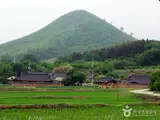
Wanggok Traditional Village, located north of Songjiho Lake, is a place worth visiting when traveling to the northern coastal region of Gangwon-do for a summer vacation. Although it is only 1.5km from the beach, curiously, the sound of the waves cannot be heard in the village. This is because the village is surrounded by five peaks -- Oeumsan, Dubaeksan, Gongmosan, Sunbangsan, and Jegongsan. Thanks to these encircling mountains, most of the houses were able to avoid bombing even during the Korean War. As a result, the old houses have been preserved intact to this day, retaining the atmosphere of a traditional village well.MoreLess
- 7
Songjiho Bird Observation Tower
송지호철새관망타워
This facility allows visitors to observe migratory birds flying into Songjiho Lake and serves as an excellent natural ecology education center. It includes a taxidermy exhibition hall displaying about 240 specimens from a total of 89 species, an outdoor observation deck offering a full view of Songjiho Lake, and an observation tower equipped with telescopes. Inside, the beauty of nature is expressed through a depiction of Natural Monument No. 201, the whooper swan, flying in to Songjiho Lake. MoreLess

Source: Korea Tourism Organization (TourAPI) · Machine-translated